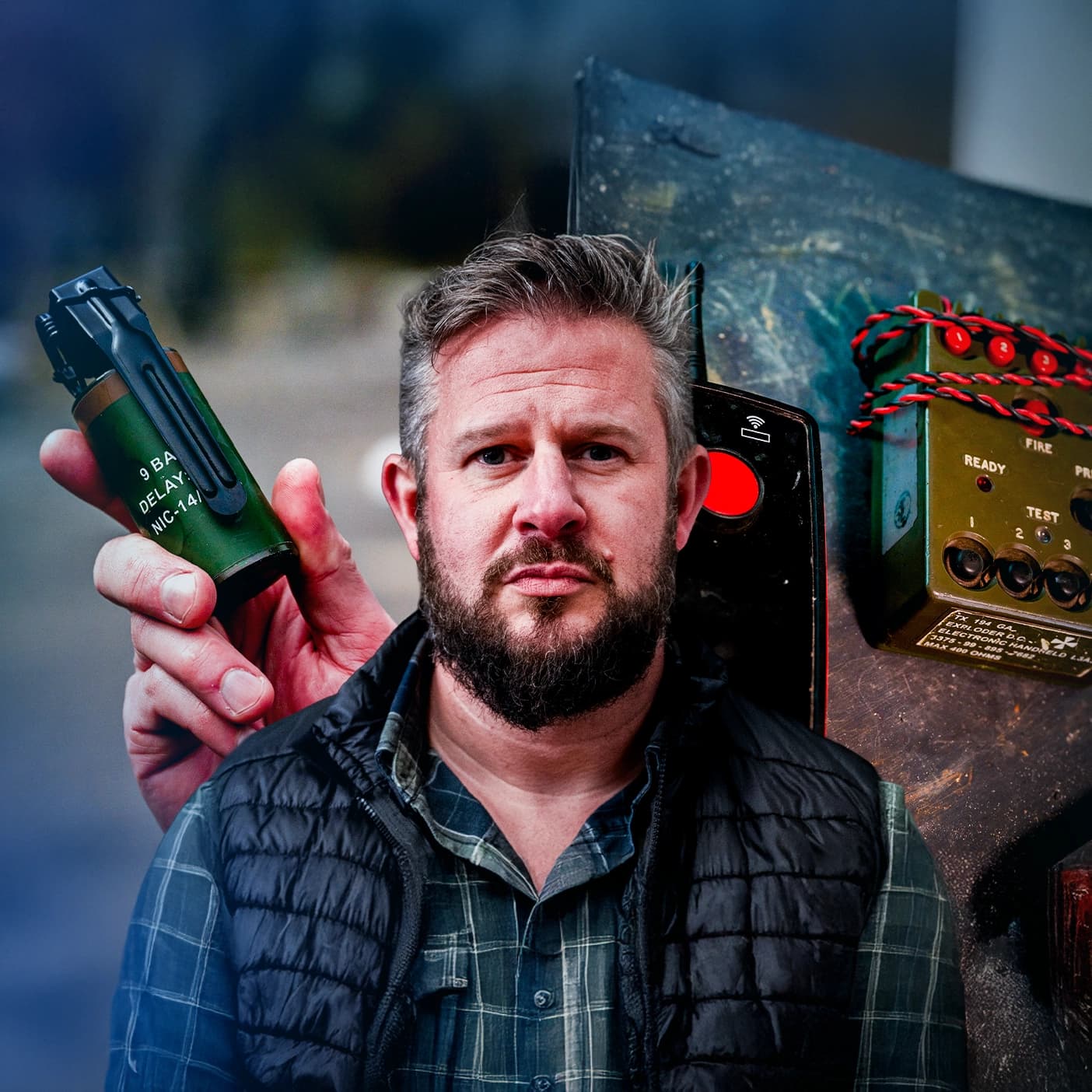
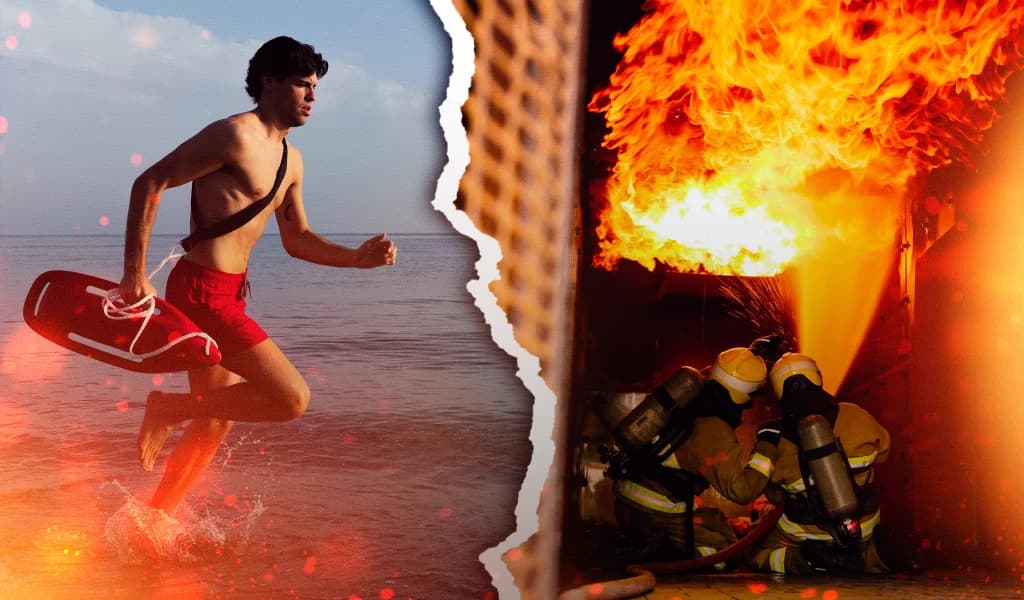
When Selema Masekela connected with Australian lifeguard and firefighter Trent “Maxi” Maxwell—known to many from Bondi Rescue—the conversation quickly moved beyond the surface of sirens and surf. As they trained together and stepped into live fire scenarios, Maxi spoke candidly about the discipline, split-second decision-making, and emotional resilience required on the front lines. Their time together offered an unfiltered look at the realities of emergency service—an experience that echoes the broader stories of commitment and courage explored throughout this article.
When Did Emergency Services First Develop?
Before the modern era, emergency services were made up of private companies and volunteer brigades. Equipment and training were rudimentary, and results were spotty. Over the years, it became clear that this left cities and communities far too vulnerable to the risk of fires spreading extensively – destroying homes and businesses, and claiming far too many lives.
Following a number of severe tragedies like the Great Fire of Tooley Street, it became clear that modern cities would need well-equipped, well-funded firefighters. To meet this need, the city of London founded one of the first centralized, publicly funded fire services: the London Metropolitan Fire Brigade, established in 1866.
The citizens of New York faced a similar need and founded the Fire Department of the City of New York (FDNY) in 1865. New Yorkers also created an ambulance service in 1869, operating out of Bellevue Hospital. The focus was on quick transfers to the hospital, not the on-scene care we now expect from today’s EMTs. London’s St. John Ambulance service (created in 1877) finally focused on standardized training and laid the groundwork for modern emergency medical services.
When it comes to ocean rescues, the world’s first surf lifesaving organization was established in Sydney in 1907. The Bondi Surf Bathers’ Life Saving Club rescued swimmers with ropes and other basic equipment, but it was still much better than reliance on sporadic amateur heroism.
The BSBLSC offered dedicated, trained responders who were stationed where they were needed most.
In the beginning, emergency services like these were purely reactive. They would fight fires once blazing, treat injuries after transport, and rescue people after they got into trouble in the ocean. Over time, emergency services expanded their mission and capabilities to prevent tragedies, educate communities, and perform a variety of other helpful functions.
Ocean Lifeguards – Diving Headfirst Into Danger
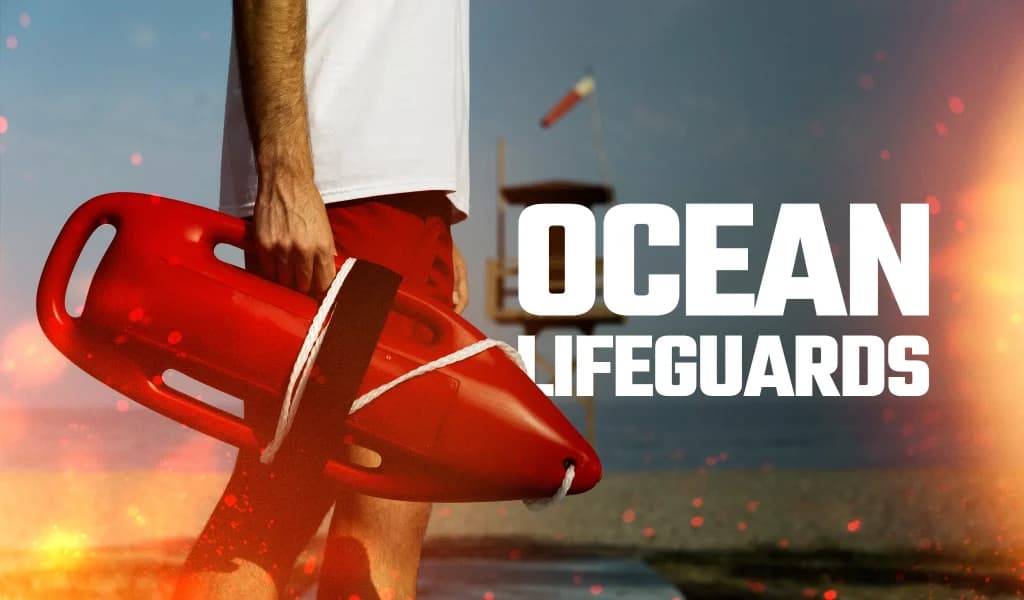
It might look like lifeguards just sit on their tall chairs and hang out at the beach working on their tans, but that’s only how it appears from the outside. While lifeguards may appear relaxed, they generally are in a state of constant vigilance, monitoring the weather, watching wave patterns, and analyzing how swimmers interact with the water. A lifeguard’s goal is to spot a situation before it develops, so that they can be one step ahead of the problem. This adds critical seconds back onto the countdown timer that is always running in a rescue situation.
Problems come in many forms. Rip currents are one of the most common threats, but sadly also one of the most dangerous. A rip current can pull a swimmer away from shore in seconds (even the strong ones). Lifeguards head out on their rescue boards, make contact with the distressed swimmer, get them onto a flotation device, and then exit the rip by swimming parallel to shore. Lifeguards also respond to injuries caused by swimmers diving into shallow water, issues arising from encounters with marine life (from stepping on an urchin to a full-on shark attack), and other medical emergencies that don’t have anything to do with the water, like heatstroke.
The conditions can be extreme, the time pressure can be intense, and a lifeguard may be partially responsible for thousands of people if the beach is popular. Being fit simply isn’t enough to handle all situations. That’s why modern lifeguarding places a heavy emphasis on prevention. Public education, clear flag placement, early warnings, and proactive interventions can all prevent emergencies from ever taking place.
The best rescue is the one that never needs to happen in the first place.
Firefighters – Facing the Heat 24/7
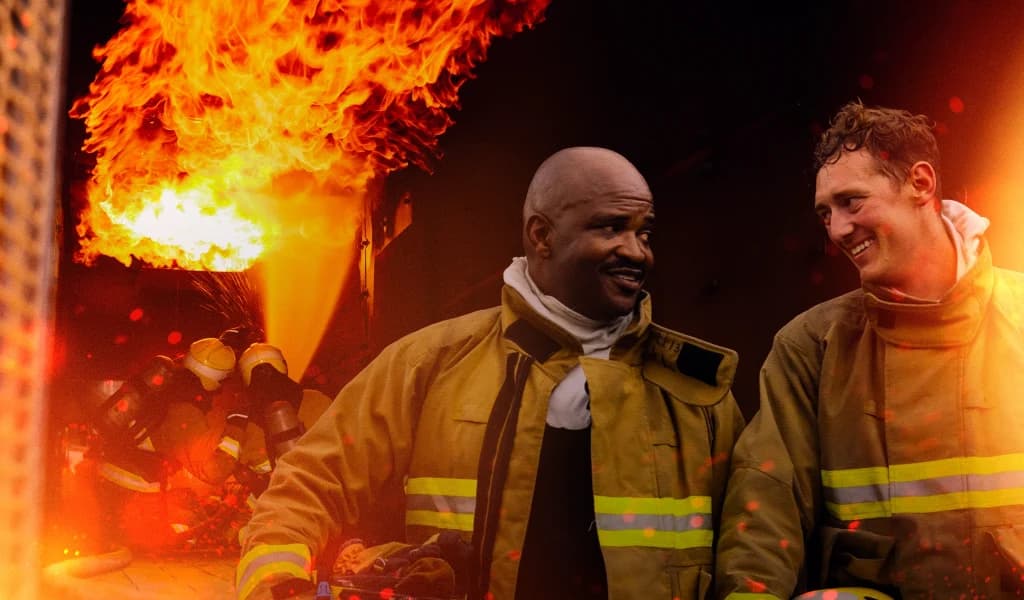
When you think of a firefighter, you might imagine them rushing into a burning building to save people inside. This is something that does happen from time to time, and it requires tremendous skill and courage. But the bulk of modern firefighting involves
responding to medical calls and vehicle accidents, as well as performing non-fire rescues (the proverbial cat stuck up a tree), and a variety of natural disasters. In a lot of places, firefighters are simply the first to make it to the scene of an emergency. They can then provide care while paramedics rush to the scene. Putting out fires is essential, but it is not the biggest part of the average day by any stretch.
Firefighters handle a few different main types of incidents.
- Structural fires (buildings on fire) require navigation of interiors, search and rescue for people trapped inside, and precise coordination with other members of the crew in tightly confined spaces.
- Wildfires are a different challenge entirely. Firefighters handling these face challenges, like shifting wind patterns, extended deployments, and the need to protect thousands of acres in a single operation.
- Technical rescues include things like high-angle extractions, getting people out of confined spaces, and helping free accident victims from their cars. This all takes specialized skills and tools, and the ability to problem-solve under pressure.
Behind all of this is the mental toll of the job. Firefighters work long shifts, suffer from disrupted sleep, and have to deal with repeated exposure to traumatic events. The work doesn’t stop when the fire is out – it sometimes stays with you wherever you go.
Perception vs. Reality of Emergency Work and Service as a First Responder
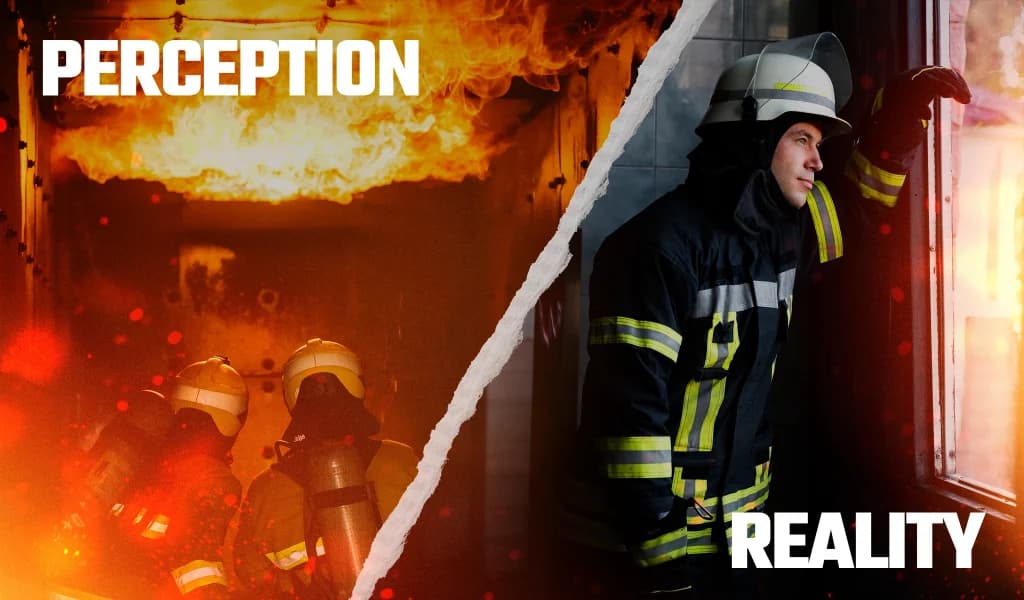
In countless TV dramas, emergency rescue work is often glamorized through stories of dramatic saves, bravery, and cinematic rescues. The reality can be all of those things, but also, there may be long lulls where readiness is the only thing required. This means that while emergency responders like lifeguards and firefighters are often known best for their shining moments of courage, what makes them great is that they are dependable and responsible day in and day out. There are long stretches of boredom that are suddenly broken by high-stakes situations where mistakes can cost a person their life.
How to Stay Ready as a First Responder
During these lulls in the action, how do first responders stay ready? The first involves active monitoring of the situation. For lifeguards, this means watching not just the swimmers, but the water, the clouds, and anything else in the environment that could have an impact on safety. For firefighters, the task can be similar. Those managing wildfires in particular have constant prep work to do to be ready to prevent a wildfire from ripping across the countryside and reaching an inhabited area.
Staying physically fit is an important part of readiness as a firefighter or lifeguard. Professional rescuers also have to protect their mental well-being. This means getting as much rest as possible during off days, managing general stress levels, and getting support when needed. In this way, emergency personnel can be present in chaotic situations, ready to act intelligently and courageously under pressure.
Finding Purpose in the Mission
Many of the people who choose to become first responders do so because they find purpose in the mission. They genuinely get fulfillment from helping people, saving lives, and making a difference in their communities. Professional rescuers experience the camaraderie of being a part of a team that will work together, sometimes under tremendous stress. And then there is the clear sense of identity one gets when serving as a firefighter, lifeguard, or other emergency worker. Generally, these are well-respected positions that confer a positive status on those selecting these careers. Why? Because if we want to live in a world with rescuers, someone has to step up, and emergency personnel do just that every single day.