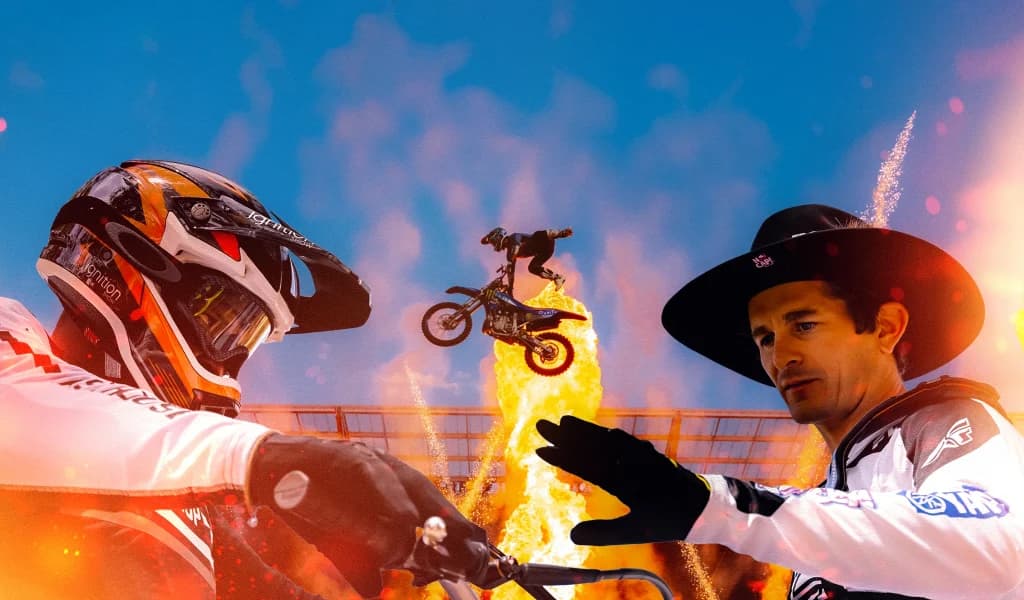
In the first episode of The Team Ignition Show season 2, host Selema Masekela (known to early X Games fans as “Sal”) meets world-class FMX star Jarryd McNeil. McNeil rode motocross from a very early age – two and a half – and ultimately moved from his home in Australia to America to take part in the X Games. He absolutely crushed it, kicking off a crazy run of medal finishes in a number of events over more than a decade. He ultimately cemented his role as the King of Tailwhips and only needs one more gold medal to pass Travis Pastrana’s all-time X Games total.
What is Freestyle Motocross?
Motorbike racing walked so that freestyle motocross could run – no, fly.
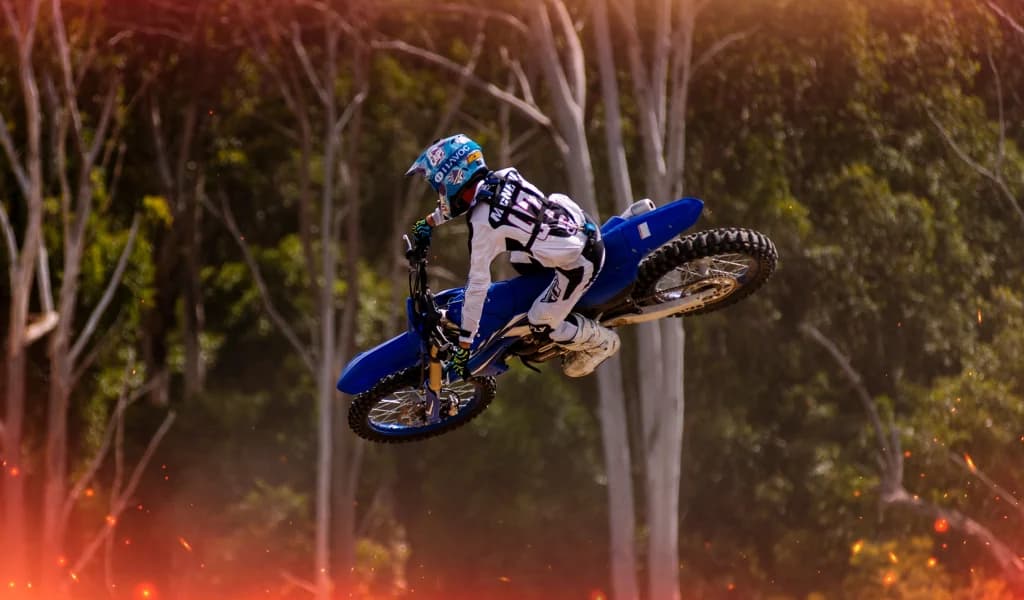
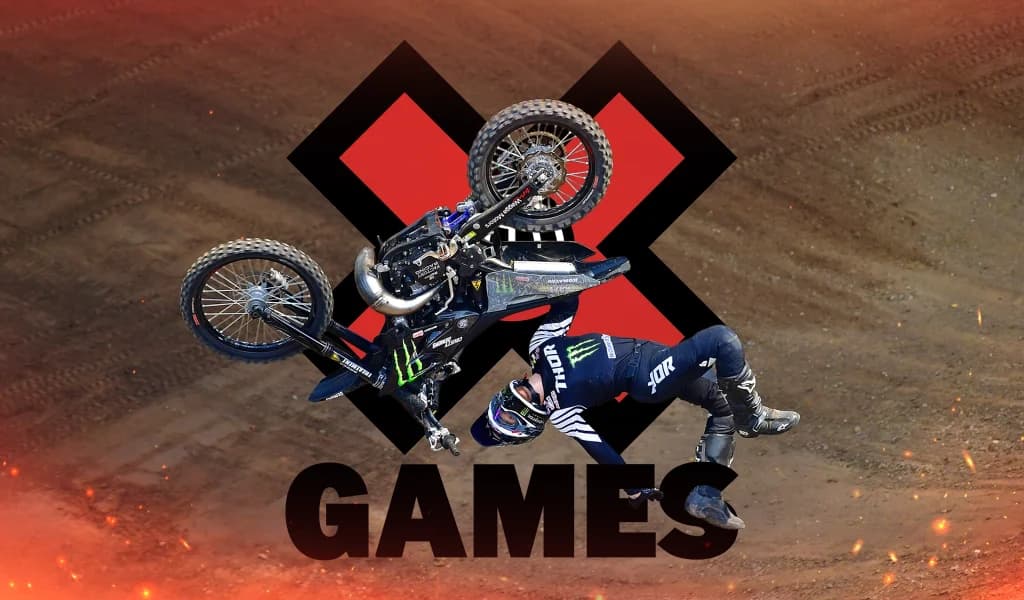
Freestyle motocross is a sport where motorbike riders launch themselves off jumps into the air to perform adrenaline-fueled stunts (like backflips) that will have the whole crowd holding their breath. Traditional motocross was all about racing, focusing on things like acceleration, speed, and lap times. FMX is all about style and pushing the boundaries of what is possible on a bike.
Where Did Freestyle Motocross Come From?
Like so many alternative extreme sports, it started as something that looked cool on a videotape. It grew over the decades to become a global phenomenon with regular competitions, superstars, and diehard fans.
Most people trace the beginning of FMX to the late 80s or early 90s. Racers would pull off cool tricks after a race. Riders like Mike Metzger and Carey Hart were some of the first to attract attention with simple whips (turning the back of the bike sideways for a moment) and nac-nacs (where the rider takes a foot off the pegs, turns sideways, and kicks the free foot back over the other side of the bike).
As with snowboarding, skateboarding, and freestyle BMX, it was the X Games that nurtured the emerging niche sport. The X Games offered a venue for competitors to show off their skills, inspire each other to try new things, and gain fans who watched on TV. Soon, athletes were shooting 50 feet into the air to pull jaw-dropping tricks to the audience’s delight.
Travis Pastrana, in particular, became one of the early legends of the sport, pulling the world’s first FMX backflip and then the first double backflip ever landed. Red Bull X-Fighters also hosted events in epic venues and pulled in more and more attention to the growing spectacle. Tricks got bigger and bigger, the stakes climbed higher, and freestyle motocross was here to stay as a standalone extreme sport.
What Equipment Do You Need for Freestyle Motocross?
FMX Bikes
FMX bikes are designed with a few qualities in mind. They have to be lightweight so that they can be manipulated in the air quickly, allowing the rider to showcase crazy flair before getting the wheels back under them for a successful landing. The bikes also have to be strong enough to withstand landings after huge falls from heights that can reach up to 60 feet. The bikes are customized to each rider’s preferences when it comes to suspension stiffness and also any special features (like grab holes) needed to make special tricks possible.
Ramps, Arenas, and Tracks
FMX courses require a good bit of engineering, often combining sculpted dirt jumps with metal takeoff ramps. Depending on the event, this could require huge stretches where riders can get the necessary speed for big air, or even monster gaps for riders to clear. Indoor events in arenas must balance compact space with the need to put on an impressive show for the crowd.
FMX Tricks List
As with most extreme sports, FMX tricks started small and simple and then grew from there until competitors were pushing the very limits of what can be done on a bike. Things thought to be impossible (like a double backflip) eventually became a standard part of riders’ repertoires. Here are just a few of the tricks you might see at an FMX event:
- Heelclicker – both heels are brought in front of the rider, over the handlebars, and around the arms, then clicked together.
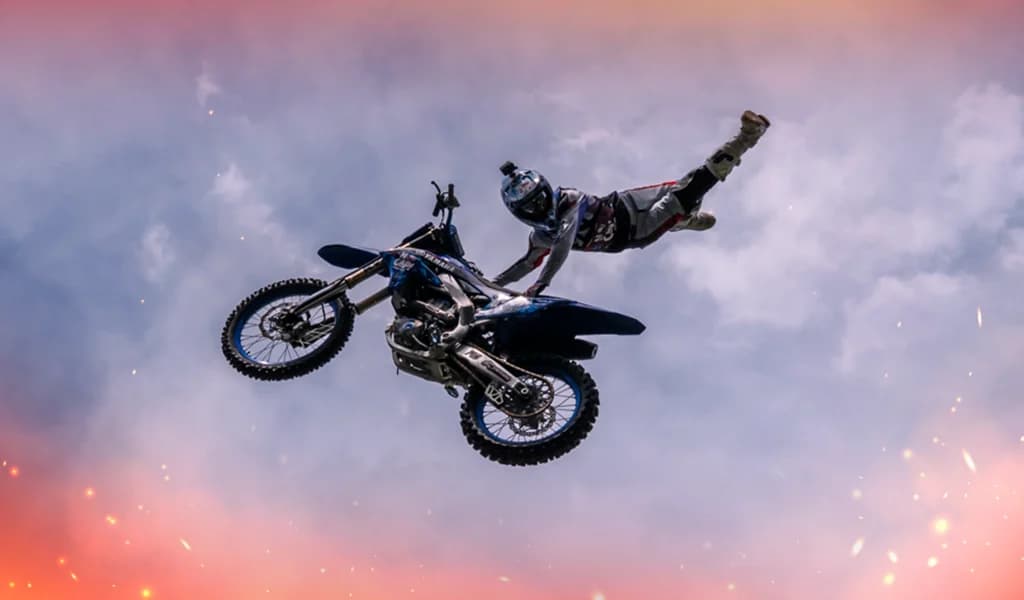
- Superman – both hands stay on the handlebars, while the rider’s feet are flung off the bike backward. The rider stretches their whole body horizontally like Superman in flight.
- Tailwhip – the back of the bike is brought sideways and then back (this can be done in a very exaggerated fashion, but this is the basic whip).
- Cordova – with feet hooked under the handlebars, the rider arches their whole body to look backward (even more impressive when done during a backflip).
- Rock Solid – the rider sets up a Superman, but then grabs the seat instead, and then lets go of the seat for a moment to fly without touching the bike at all.
- Volt – the rider does a full 360 next to the bike, then catches and remounts. This is among the riskiest tricks in modern FMX.
- Kiss of Death – the rider starts with a Superman, but then dips the rear tire of the bike down and does an arching handstand straight up over the bike, nearly bringing their head to the front mudguard.
- Shaolin – the rider brings their feet through their arms and kicks both legs out over the handlebars.
- Bundy – the rider does a backflip over the bike while holding on with one hand (Clinton Moore’s signature move).
Training for the High-Flying Thrills of FMX
FMX is not just random fun for crazy riders. There’s a lot of training and discipline involved. Riders need core strength for many tricks where the rider uses their muscles to spin themselves or their bike. They also need serious flexibility for a number of the tricks described above. And an underrated aspect of FMX athlete training is conditioning. It’s exhausting riding heavy bikes around and around, so riders need to have a certain amount of endurance.
Then there’s the mental game.
It’s obvious that top-level FMX is dangerous. Riders need tremendous courage, but also poise and focus. They have to be ready to properly execute all the details of their tricks, and that takes total concentration. They are at the same time fearless and careful, knowing what they and their bike can handle thanks to countless hours of training reps.
New tricks are learned in a thoughtful progression that starts with foam pits and air bags, and then moves to resi landings and finally the hard surfaces we see at events. Even then, each launch off a huge ramp is a major adrenaline spike, and each successful landing is something to be grateful for.
FMX Safety
Anyone can see that freestyle motocross is risky, and that’s why riders wear multiple pieces of safety gear. Top riders rely on high-impact helmets, neck braces, chest protectors, knee braces, and more to protect them in the event a trick goes wrong. Unfortunately, it doesn’t take much for that to happen. A slip of the foot, a missed grab, or a rotating bike that is not quite moving like it’s supposed to can cause a wreck. Broken bones, concussions, and ligament tears come with the territory, even for seasoned pros.
How Are FMX Competitions Judged?
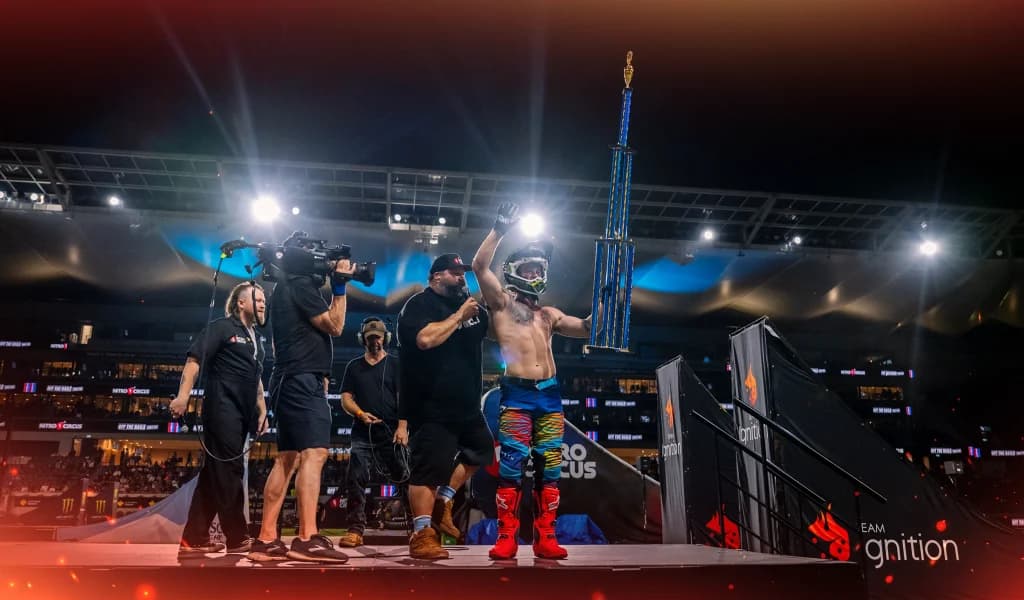
Both the X Games and Nitro World Games offer a look into how FMX is judged. Like other extreme sports, there are a number of criteria for judging tricks. These include amplitude (how high and far did the rider go?), difficulty, execution, style, and use of the course. Typically, a rider needs high marks in all of the criteria to take home a gold. They have to go big, show the crowd something special, and perform a difficult skill with a decent amount of style.
For example, the Lazy Boy front flip from Rob Adelberg took gold at X Games Chiba in 2024.
There are a number of different FMX events. Some are freestyle runs that link together multiple tricks. Best trick competitions challenge riders to go as big as they can, sending a huge trick into the air. There are also step-up events where riders need to clear the highest bar they can on a bike, and there are also quarter pipe competitions that emphasize massive air.
The Future of FMX
Bikes keep getting more advanced, which allows riders to break new ground with insane tricks every year. Just when fans think athletes can’t possibly have anything left in their bag of tricks, they pull out something fresh and incredible. Young riders keep coming into the pipeline, new events are in the making, and ingenuity continues to drive the sport into each new year. As long as riders continue pushing limits and reimagining what’s possible – and they always have – the sport will keep revving the motors of fans all around the world.