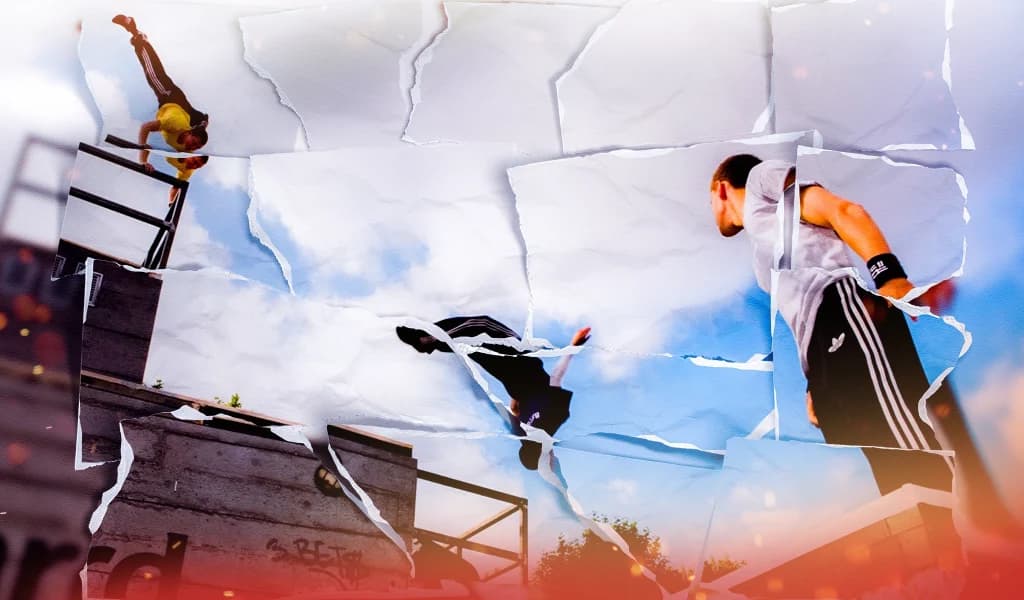
Have you ever seen a viral clip with someone jumping from rooftop to rooftop, vaulting over railings, or running up walls like a comic book character? If so, you’ve experienced parkour, also known as “freerunning.” It’s a smooth, yet creative way to move through any environment, from urban concrete jungles to natural settings around the world. You might say it’s the oldest sport there is, but the modern incarnation and movement is rooted specifically in the activities of French traceurs.
It’s something nearly any person can do (at least the small moves). But how did it really start?
A Parkour Mindset
The sport traces its roots to French military obstacle-course training, developed long ago by a soldier named Georges Hébert. Years later, a French teen named David Belle had seen his father, Robert, work out on these courses and was inspired to try it out. Soon, Belle and his friends were running all over Lisses, France.
One of the guiding philosophical principles of the group was “Être fort pour être utile” (“Be strong to be useful”). Parkour practitioners train not for mirror muscles, but to be more capable and to navigate their world more easily, even artfully. Obstacles aren’t barriers – people just need to know how to use them. Go around, go over, or go through, but don’t stop moving. It’s all about flow.
Freerunners move deliberately, but never have to stop for a wall, gap, or railing.
The Global Movement
Early videos like Yamakasi, District B13, and even the chase scene in Casino Royale showcased what the new movement was all about. The sport gained traction through chat threads on early internet forums like parkour.net as traceurs discussed techniques. YouTube was also a good incubator for the first viral clips like Oleg Vorslav’s “Russian Climbing” video, as well as the many tribute edits of David Belle footage. Teams such as Storror, Team Tempest, 3RUN, and Team Farang developed channels where a global audience could get inspired to head out to their local urban playground.
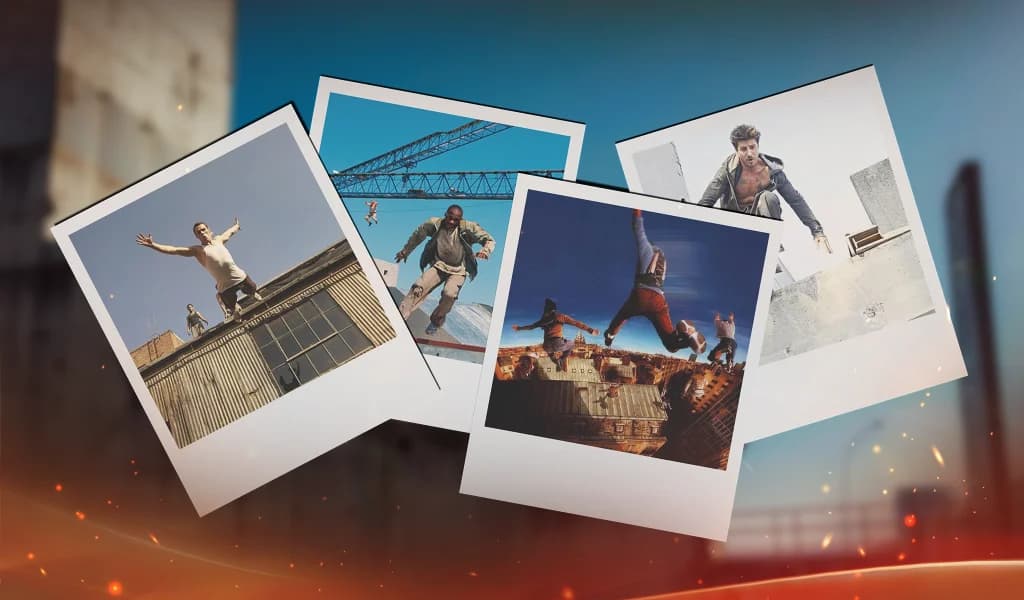
As parkour spread beyond Europe, a new generation of athletes helped define its modern style — including Australia’s own twins, Dylan and Brodie Pawson. Known for their fluid movement, massive rooftop lines, and cinematic freerunning edits, the Pawson brothers became standout figures in the global scene. Their work helped put Australia firmly on the parkour map, blending technical precision with creativity and scale, and inspiring a wave of athletes to see their cities as limitless training grounds.
Throughout the 2010s, parkour grew through gyms, workshops, and large events. Red Bull’s Art of Motion became the premier freerunning competition, while World Chase Tag and the FIG Parkour World Cup helped formalize the sport. Parkour athletes (alongside climbers) also became dominant competitors on shows like Ninja Warrior, and served as elite “taggers” on Ultimate Tag, bringing the discipline to mainstream TV watchers.
Around the same time, athletes like Sébastien Foucan helped introduce freerunning’s expressive side to a mainstream audience, while groups such as Storror pushed the limits of scale, speed, and risk with massive urban lines across Europe. In Asia, teams like Team Farang brought a distinctly raw, exploration-driven approach, often venturing into abandoned structures and dense cityscapes that redefined what freerunning could look like.
As social media evolved, athletes launched successful pages on platforms like Instagram and TikTok, where GoPro POV clips let the viewer experience a taste of what it’s like to flow over rooftops in Santorini, or how to wall run like gravity isn’t real.
Video games like Mirror’s Edge and Assassin’s Creed have parkour built right into the experience so that, even if fans can’t get out and do it themselves, they can get a feel for what the sport is all about.
Today, parkour’s progression is driven as much by storytelling as by technique. Social platforms, cinematic edits, and POV footage have allowed athletes to document not just their movement, but their mindset — turning freerunning into a global conversation rather than a local practice. From tight alleyway lines to sprawling rooftop runs, these athletes continue to shape how parkour evolves, inspiring new traceurs to move with purpose, creativity, and control.
Parkour and Fitness
If you can run and jump, you can get started with parkour.
Strength
Parkour relies heavily on:
- Lower-body power for jumping, landing, and climbing.
- Upper-body strength for climbing, cat hangs, and vaults.
- Core stability for balance and control.
Parkour uses well-rounded athleticism, but definitely favors lighter people with a good strength-to-weight ratio.
Mobility / Flexibility
An athlete needs to be somewhat flexible to really enjoy parkour and pull off a variety of moves. A basic stretching regimen should be enough.
Balance
The sport takes coordination and balance to stick landings. Athletes need to have good focus and vision to place their feet and hands accurately. They also need to have an improvisational outlook so that they are ready to adapt a movement to the terrain encountered.
Endurance
If you’re going on a true freerun, you’ll want decent endurance. If you’re looking to compete in events like Ninja Warrior, this will be highly important, as will grip strength and developing a lean physique. It’s great to be muscular, but extra weight is extra difficulty.
You don’t start as a superhuman, but if you stay dedicated, parkour will help you develop a solid, well-rounded, healthy physique.

Getting Started with Parkour – The Essential Movements
Parkour isn’t all about breathtaking flips or big drops. At its core, it’s simply about graceful, fluid movement.
Landings
A soft landing is a hallmark of parkour. You don’t want to land with a dull thud on the ground. Instead, traceurs land with bent knees and controlled momentum. You have to protect your joints and avoid damage.
Jumps
Parkour relies on controlled jumps – like those you might see in a cat. It’s about using just the right amount of force to reach your objective, and then settling into balanced poise.
Vaults
Vaults help you move efficiently over obstacles. Common beginner vaults include the safety vault, the step vault, and the speed vault. In each, the athlete plants their hand on the obstacle to be vaulted, creating a stable connection past which the legs can be swung. These vaults can be chained into more complex moves down the road.
Rolls
Forward rolls and shoulder rolls are essential for absorbing a tough landing and turning it into fluid motion. It’s a mandatory technique for anyone who is going to fling themselves through the air, time and time again. It makes landings painless and keeps the force from going into your knees and back.
Cat Hangs and Climb Ups
These techniques teach you how to hang from and climb over walls safely and smoothly, developing grip strength and pulling power.
Wall Runs / Tic Tacs
These movements allow traceurs to push off walls and take some steps up vertical surfaces to clear nearby obstacles (like fences).
Common Misconceptions About Parkour and Freerunning
Myth #1: Parkour is dangerous
It really doesn’t have to be dangerous. Start with small techniques and stay comfortable. As you gain skill and confidence, move on to harder skills. There’s no rush to do things that you are not ready to do. As with any sport, proper technique and control make all the difference and can help you minimize any risks.
Myth #2: You have to be in shape to do parkour
The simple moves are accessible to anyone in reasonably fit condition. As you continue practicing, parkour can increase your fitness level quite a bit. This will open up more challenging and impressive moves. If you can run and jump, you can try parkour.
Myth #3: You need to do flips
You don’t need to do flips to be a freerunner.
Myth #4: You will get hurt
Injuries are far less common when you focus on safety, awareness, and self-control. Only take on the risks you are ready for and put in the time to develop solid technique. This will keep you fairly safe, and you enjoy experimentation with movement around your local area.
Culture and Community
A parkour session in a group is called a “jam.” Even if you’ve never done parkour, you can find a jam near you and just show up. Many groups are quite welcoming. The sport is known for being inclusive. It’s a global community, really. People might even help you learn some beginner moves. There’s less gatekeeping than with many other sports and activities.
There may also be a ninja warrior gym near you with classes and equipment like foam pits and structured features that will enable you to learn techniques with minimal risk.
More Than a Sport – The World Looks New After Parkour
Once you become a freerunner, spaces look different. Walls don’t stop you. Staircases aren’t boring. Ledges are the key to climbing a building higher than most people think possible.
You see possibilities. You can explore your city, town, or natural surroundings. You can get creative. Parkour athletes are generally much more situationally aware because they see their world differently.
The world is full of obstacles, and parkour teaches you to meet them with creativity, courage, and flow. A traceur can be very hard to stop.
Parkour starts with mindset and movement, but as athletes progress, technique and preparation become just as important as creativity. Skills like balance, spatial awareness, and mental resilience are what allow freerunners to move faster, smoother, and with greater control as the environment gets more demanding. That progression — and the techniques that support it — sits at the heart of modern parkour training.