
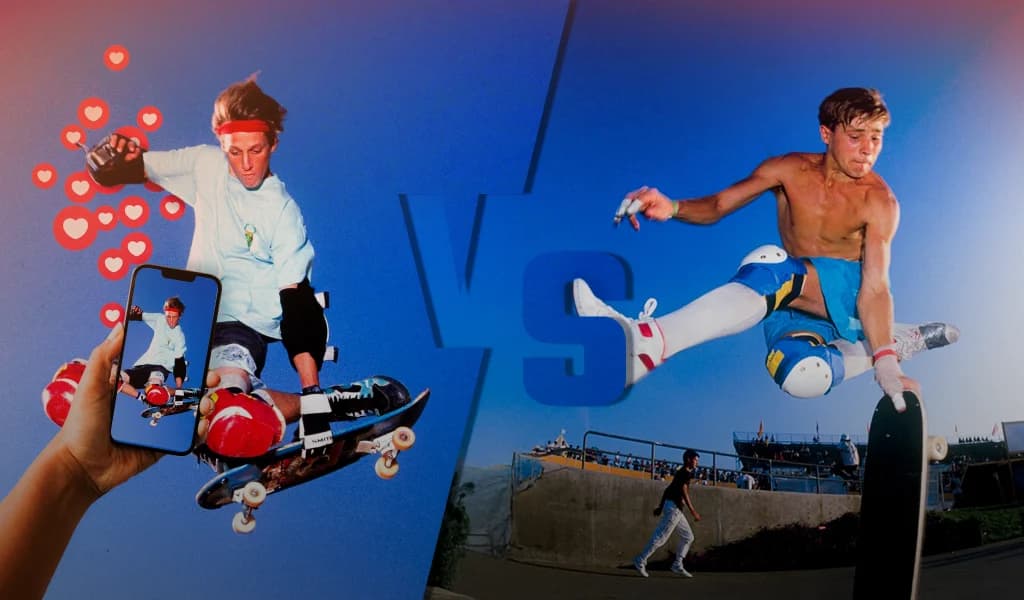
In action sports, competition legends are generally the biggest names. But the modern social media era has also given rise to a new type of notorious athlete: the viral star. This has created an interesting debate in the industry: action sports influencers vs. pros – who is really pushing these activities forward?
The Old Way to Grow a Big Name in “Extreme” Sports
Decades ago, athletes in sports like skateboarding, BMX, and snowboarding would work and work on a trick. Then, the newly landed trick would show up on a video or in a magazine. The process took a lot of time. Riders like Rodney Mullen were king. Then came the X Games and later the Olympics. Instead of just showing off in media projects, big new tricks would be validated in competition. This is where Tony Hawk ascended to glory, Shaun White’s defined global competitive dominance, and Travis Rice showed his unreal riding skills.
In general, in this era of yesteryear, it was much harder to gain recognition. It generally had to be earned through astounding tricks, incredible style, peer respect, and, later, competitive success. But what happens when an algorithm can send someone to the front of the line without the need for any of that?
Rewriting the Rules
Social platforms like YouTube didn’t rewrite the rules overnight. Remember, video uploading sites are quite old and started with personalities like LonelyGirl15 and the “Numa Numa guy.” But new gen social platforms like TikTok, when they finally took off, had a much more distorting effect on action sports. To make it big, you no longer needed to be acknowledged in the scene or in competitions. You no longer needed anyone’s permission to become famous. A girl or boy with a skateboard and the knowledge of how to crack the algorithm that determines what winds up on people’s “For You” pages could become an overnight sensation. No context needed. No accomplishments needed.
A new era had begun.

Be good at the algorithm, and the rest will follow
The rise of social media created a shift in the action sports influencers vs. pros dynamic. When a new platform comes along, the disruption shakes things up and often infuriates the traditional gatekeepers. It’s true in many industries – not just action sports. You don’t have to be the best plumber, scientist, or yoga instructor to make it big online. You generally have to be competent, but your main skill needs to be in gaming the algorithm. If you’ve got that down, you can get much bigger than far more knowledgeable and skilled competitors in your niche. Understandably, this can be demoralizing and upsetting for people who have dedicated their lives to a craft, activity, or sport. Their mastery doesn’t translate to online success. Meanwhile, a less talented member of their community blows up and enjoys all the benefits of going viral – like record-breaking subscribers, huge sponsorships, and desirable collaborations.
The technical nuances that make someone a master at BMX, freestyle skiing, or even freerunning aren’t needed to capture the attention of the casual audience. The “rule of cool” reigns supreme, and other skills can shine. What dictates success online may be a pretty face, gorgeous backdrops, or content that scratches an addictive attention itch. Simply put, there’s no one telling an average athlete that they can’t become famous online. The pool’s open, and anyone can swim.
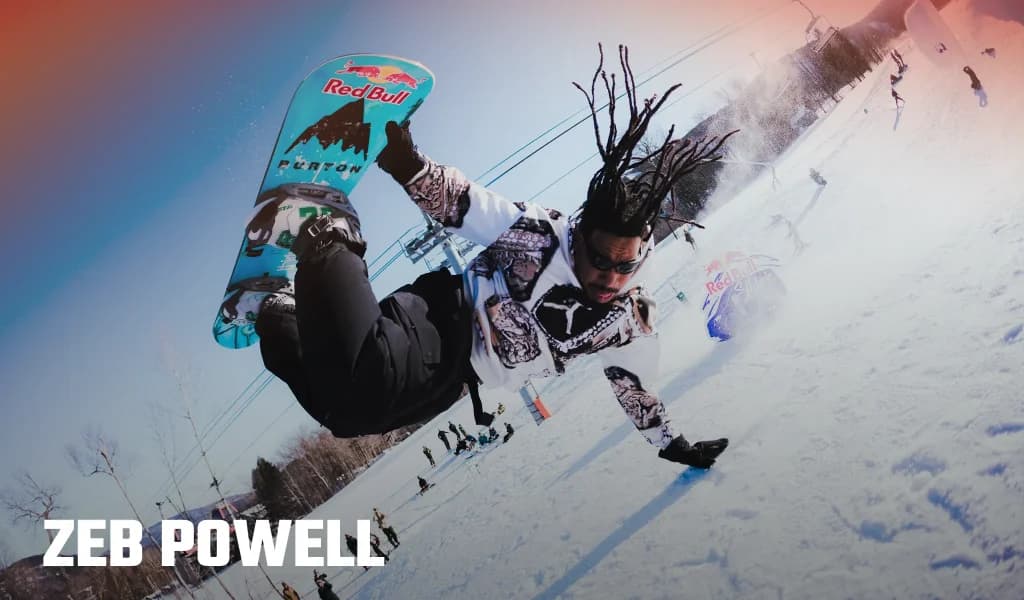
No shade whatsoever, but athletes like Nigel Sylvester in BMX or Fabio Wibmer in mountain biking built enormous global audiences through awesome, shareable content rather than relying solely on contest results. Sylvester doesn’t compete, and while Wibmer was the 2016 Austrian Downhill Champion, he has focused mainly on content creation since then, amassing over 8 million subscribers on YouTube. Skateboarder Andy Anderson is followed in large part because he has a great personality – happy, humble, and human. Snowboarder Zeb Powell is also a champ, but you’ll see him on knuckle huck-type stuff or repping streetwear. His expressive ride clips can reach fans who have no interest in following competition broadcasts.
It’s really not a complaint about ability – these athletes are all tremendously skilled. There’s more than one way to find an audience now, and they are helping to show that. When a viral clip does numbers, and someone’s gold medal run does not, however, there’s reason for hardworking, dedicated athletes to be a bit annoyed. Social platforms have created another specialty within each sport: content dynamo.
What Sells?
If a medal-winning run doesn’t always get clicks and viewers, what does? Well, social media rewards different things. Gorgeous visuals, intense moments, controversial opinions, and even tutorials can all form the basis of a popular clip online. Sometimes this requires a ton of skill, sometimes it doesn’t. It’s undeniable that a rider who takes on a huge canyon gap or a freerunner who nimbly runs along a skyscraper rooftop edge are both doing something highly risky and difficult. If video clips of these activities keep people glued to the screen and stop the scrolling, the clips will win on whatever platform they’re on.
Doing something obviously dangerous is like a cheat code for virality.
Climber Alex Honnold’s documented free solo ascents, including his recent ascent of Taipei 101, show that people can’t look away from someone who is one mistake away from certain death. Parkour athletes like the Pawson twins built huge audiences by pulling off tricks at city spots where the consequences for a mistake are obvious. Trials rider Danny MacAskill transformed technical street riding into a form of cinematic storytelling. He earned millions of viewers, and a chunk of them surely were not following his competitive trials.
Controversy arises, however, when spectacle comes before substance. If a crash or near-miss is getting more views than a perfectly executed trick, what is the algorithm really rewarding? And are younger athletes learning that visibility matters more than, say, longevity? Injury risk has always been there, but if the almighty algorithm demands that athletes go big or go home, it might be distorting an incentive that was already skewed enough. Action sports put a ton of pressure on athletes to escalate and progress, but it might not be the best if new kids are put in front of a global audience and told to make a big moment or suffer irrelevance. Access to a massive viewer count is not always a healthy thing for the next wave of talent in the sport.

The Joy of Creativity
Dangers aside, one of the neat aspects of social media is that it allows for a different kind of athlete to flourish. As said above, there’s more than one way to go viral – not all videos have to be death-defying. Freed up from the need to earn the attention of big sponsors and their large-budget film crews, young athletes can explore the creative, artistic, human side of action sports. A high schooler putting paint on their skateboard wheels and riding out a design might not have a place at the X-Games, but it could be a cool video. A BMX rider showing their grandparents going back on the bike for the first time in decades could also capture people’s attention, for all the right reasons. Grandma isn’t going to take any sick jumps, but her infectious joy might still go viral.
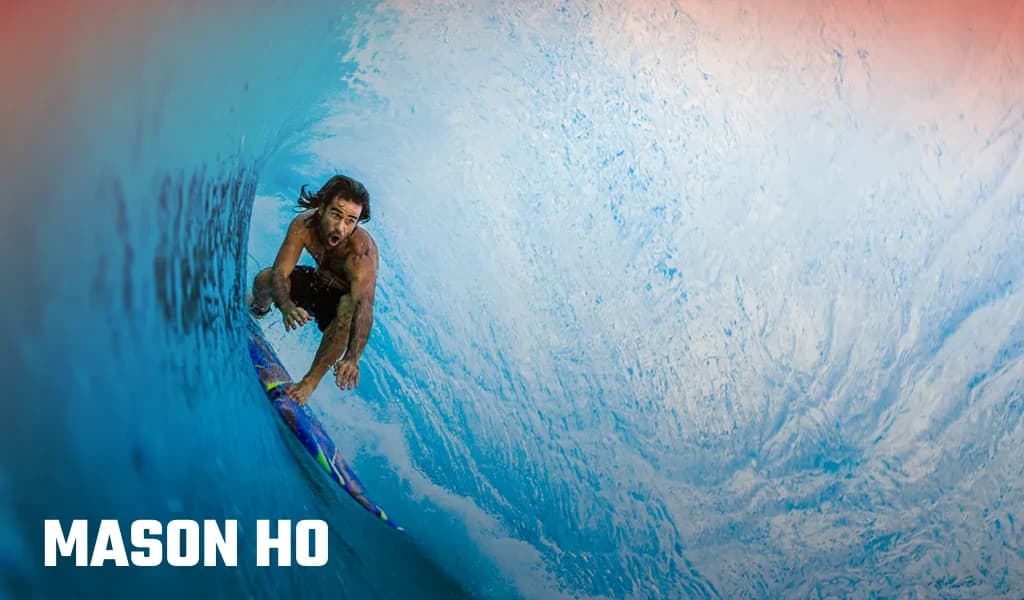
Surfer Mason Ho shows audiences that playful, unconventional wave-riding thrives online. Who cares what competition judges think of it? The audience has spoken (and they love it). Travis Rice’s snowboarding film projects now feel like art films sometimes. Rayssa Leal is a competitive juggernaut, but she first went viral for doing a heelflip in a fairy tutu. Adaptive athletes, regional scenes, and underrepresented folks everywhere can gain visibility that traditional media probably would not have provided.
For brands, this changes everything. Sponsorships can follow engagement and authenticity rather than just podium medal counts. Companies that once measured athlete success by competitive results can now also measure it in community connection. Athletes are storytellers, filmmakers, and cultural bridges between sports and their audiences.
Wasn’t It Always About Chasing Clout?
Drawing a clean line between progression and attention-seeking behavior can be hard. Action sports athletes always had to go big and demonstrate that they were able to do things others could not – a bigger stair, a farther drop, a more massive wave. Many tricks that are now considered foundational were once considered nuts. The first double backflips in motocross or triple corks in snowboarding were at the edges of what was possible, until someone finally did them. Progress has always required athletes willing to risk it all. But mastery and big risk are no longer the only way to get popular.
There’s also a lot of acceleration to the timeframe of progression. Viral distribution means that a trick can go from being totally new to totally expected nearly overnight. A trick landed once in a remote location can feel mandatory worldwide just due to the power of a clip. The long, slow slog of refining new tricks is at odds with the audience’s demand for constant novelty.
Action sports will keep evolving as they always have. Social-first athletes are just another phase and another adjustment to how the world of action sports notoriety works. Both are viable pathways to fame. An athlete who loves an activity but who has no desire for the competitive grind can grab a camera and start getting creative.
Innovation and clout-chasing are not perfect opposites. They’re synergistic. It’s really about what the audience wants, and they clearly have an appetite for more than just competitive wins and technical mastery.
Online, even if you don’t stick the landing, the crowd may still cheer.