You’ve learned how to read a break and catch your first wave. Maybe you’ve gotten your feet wet and caught some waves here and there. That’s a great start, but what if you want to dive in the deep end?
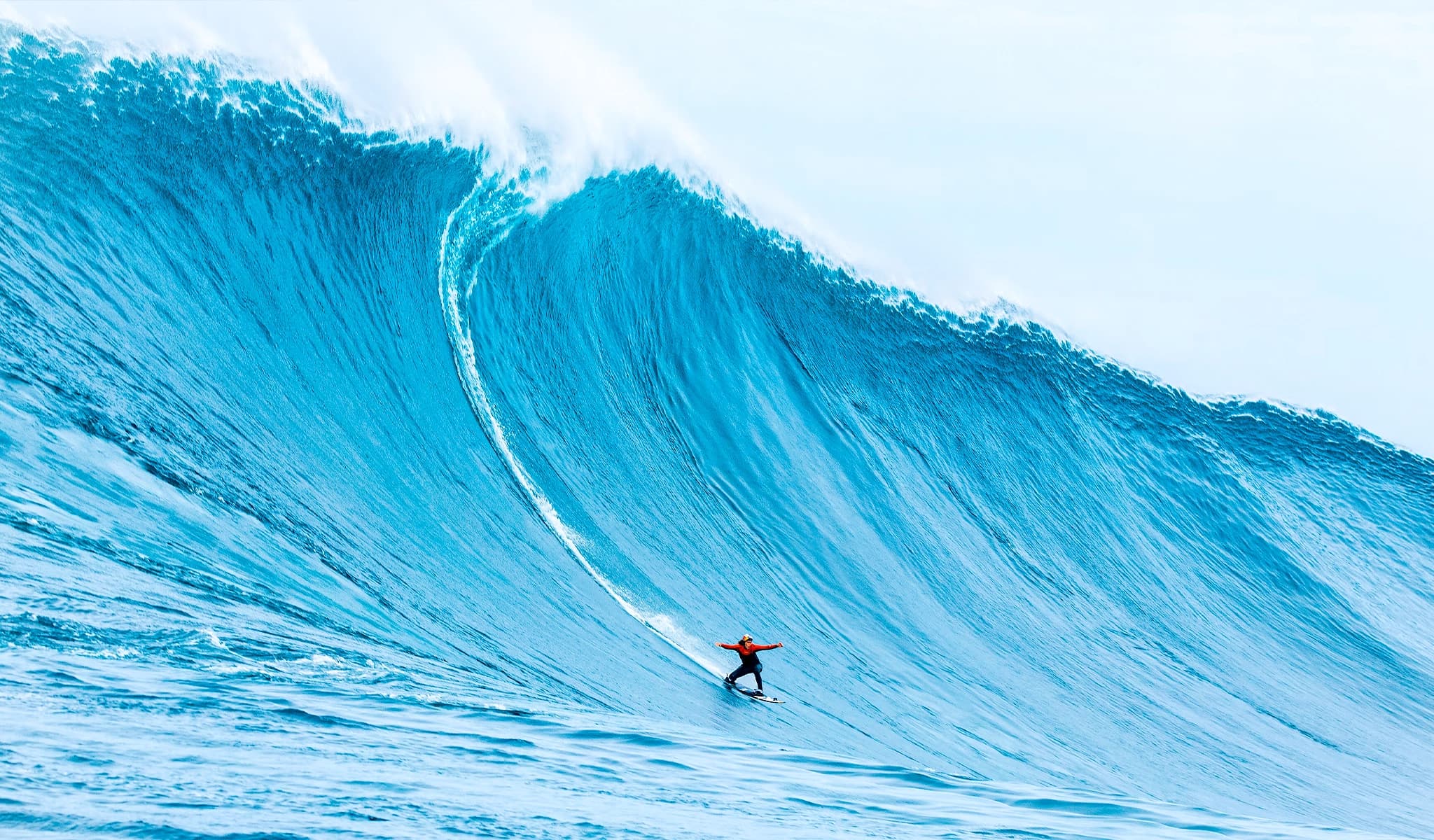
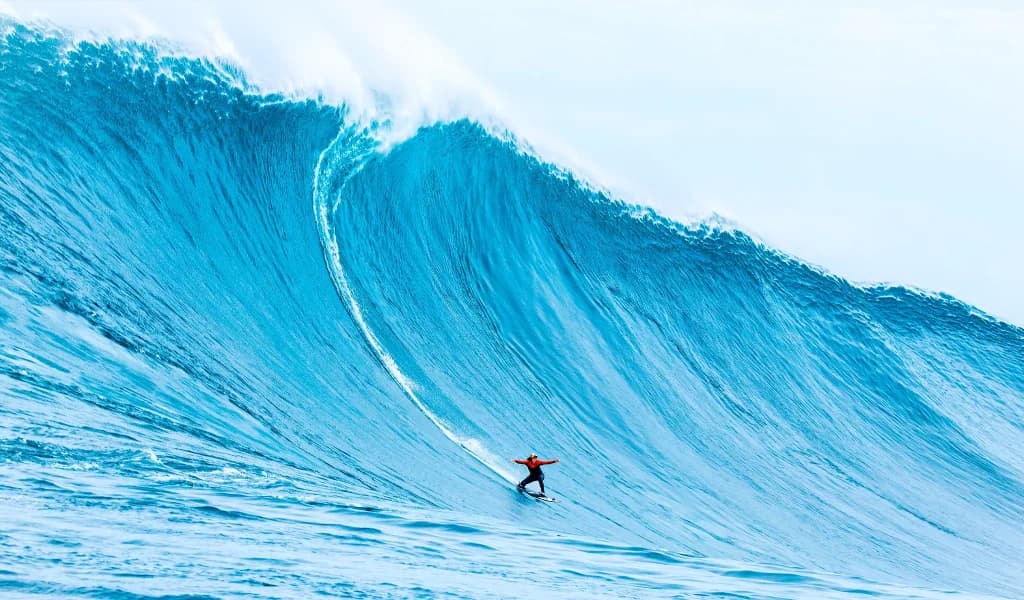
Big wave surfing takes boarders well beyond their comfort zone. They catch waves the size of eight-storey buildings and live to tell the tale.
It takes a certain mindset to voluntarily head out to the deep waters and tackle the most insane breaks Mother Nature has to offer. But how did this ancient sport turn into one that generates viral clips where a surfer the size of an ant is pitted against a wall of blue and white?
The Unbreakable Barrier
For many years, there was an unofficial limit to the size of wave a human would consider surfing. Paddling out by hand meant that a surfer just could not generate enough speed to take on and catch a wave bigger than, say 20 feet. Bigger waves were cooking along too fast to hitch a ride on.
They were considered unsurfable.
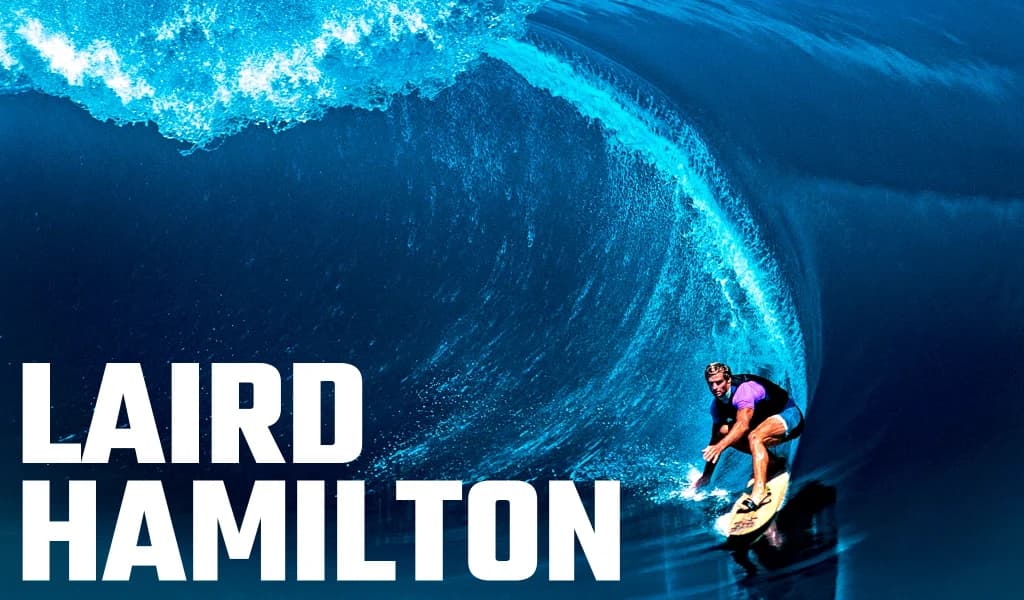
The “saltwater ceiling” broke in the early 1990s. Surfers Laird Hamilton, Buzzy Kerbox, and Darrick Doerner took a small inflatable boat out to a break on Oahu’s North Shore. There, they would tow each other into swells that surfers would previously avoid completely. Tow-in surfing was born, and most riders eventually settled on the use of a support Jet Ski as the best method.
By ’94, Hamilton and his buddies had turned Maui’s “Jaws” area into their personal proving ground. This built up to a ride in 2000 that is now referred to as the “Millennium Wave.” Surfing in Teahupo’o, Tahiti, Hamilton rode a wave so majestic that footage of it is still used today to explain why that break is considered one of the most dangerous in the world. Everyone’s eyes had been opened to what was possible.
The Race to 100 Feet
Riding a 100-foot wave is pure madness. It still sounds absurd, even to those who love surfing. But that doesn’t stop adventure athletes from dreaming the dream anyhow. The rise of
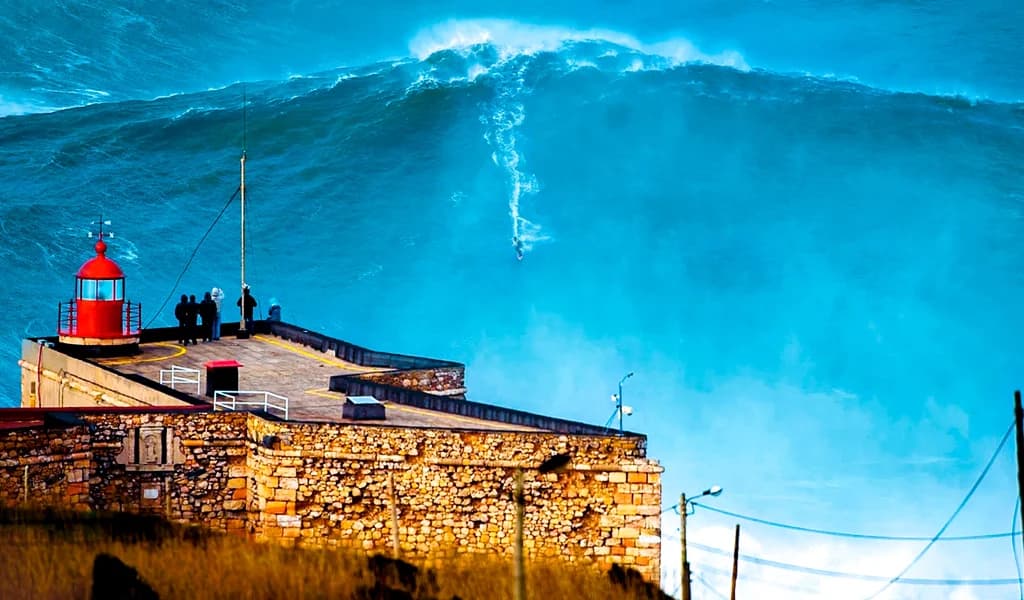
tow-in surfing begged the eternal question that lurks in every sport: how big can a human being go? Efforts to answer the question center on a Portuguese fishing town in Nazaré called Praia do Norte. It sits at the mouth of an underwater canyon that is miles deep – the largest of its kind in Europe. The ocean topography there focuses and amplifies incoming swells into walls of water unlike anywhere else on Earth.
Garrett McNamara set the first Guinness World Record in this spot for big wave surfing in 2011 when he rode a monster 78-foot wave. Rodrigo Koxa one-upped him in 2017 by catching an 80-footer. A few years later in 2020, German surfer Sebastian Steudtner rode an eye-popping wave officially measured at 86 feet. Just verifying the measurement took 18 months of forensics to complete (they used Steudtner’s own lower leg as a reference scale). He’s since surfed a wave measured even bigger at nearly 94 feet, though this size remains unratified by official organizations.
That leaves the sport’s remaining Everest at the 100-foot mark, and most of the athletes chasing records believe it’s a matter of when, not if, someone rides it.
Beyond Nazaré: The World’s Other Great Big Wave Breaks
Nazaré dominates the record books, but it’s far from the only serious big wave destination:
- Jaws (Peahi), Maui, Hawaii. The birthplace of tow-in surfing is still one of the sport’s premier spots. Jaws is known for waves that break with tons of power over a shallow reef.
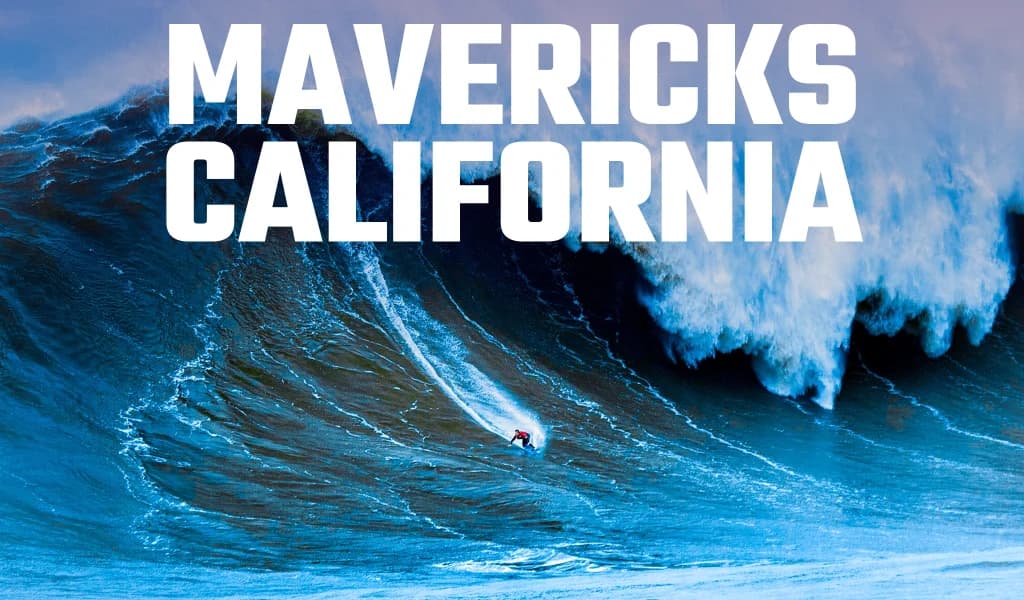
- Mavericks, California. This is a cold-water break near Half Moon Bay known for its brutal, unpredictable close-outs. It has a reputation for serving up some of the most physically punishing waves in the sport.
- Teahupo’o, Tahiti. This is not the tallest wave-generating spot in the world, but it’s arguably the heaviest. The break has become a fixture of highlight reels, and in 2024 it served as an Olympic surfing venue.
- Cortes Bank, off the California coast. This is a remote, open-ocean seamount roughly 100 miles offshore. It takes a boat expedition just to reach it, but it was here that Mike Parsons set a world record in 2008 before Nazaré took over as the premier location for big wave surfers.
The Mental Challenge
Like so many adventure sports, big wave surfing doesn’t all come down to athleticism. Training, technique, and strategy all play a big part in keeping big wave surfers alive and mostly unharmed. One of the major pieces of training revolves around holding breath for long periods of time. A wipeout will have a surfer underwater and disoriented for an extended period of time. For this reason, many surfers can manage to make it multiple minutes without taking a breath. Unfortunately, it isn’t just the wave that you’re surfing that you have to worry about. Waves can come in sets, and a surfer may be underwater for an extended time without a window to escape.
Steudtner has taken his training seriously enough that he now teaches it to people outside the sport. For example, he was brought in by a professional soccer club to teach players the same breath-control and pool-training techniques he uses to stay alive in 80-foot surf. For the players, it was styled as staying calm under pressure rather than a single physical trick. This is where big wave surfing starts to tie in to all the other adventure sports. The required mindset must be strong without becoming too rigid. There can be no panic when it is time to perform. Just like a mountain biker dropping off a monster cliff or a wing suiter stepping out of a plane, a big wave surfer has to feel ready to ride. They can’t be tensed up and freaking out, or there’s going to be a disaster.
Taking control
Garrett McNamara has described his own mental framework with a simple three-word mantra: present, connected, protected. This is his anchor for staying grounded when a 78-foot wall of water is bearing down on him. He doesn’t let fear pull his attention toward imagining the things that could go wrong. Laird Hamilton also has a mental technique for surviving a hold-down. Instead of fighting the wave and swimming like mad, he lets his surfboard’s buoyancy tow him up and away.
At a time when everything is frothing and spinning, this is a counterintuitive skill that takes presence of mind to trust. It’s the road to mastery to be able to hold on to techniques like this when things go wrong.
No matter how strong your mindset is, however, there are still going to be bumps and bruises, to say the least. A serious wipeout on a big wave can pin a surfer 20 to 40 feet underwater. The surfer will be tumbling violently and have no real sense which way leads up to the surface – to air and to safety. Even if they get battered, a surfer in this situation needs to stay calm and conserve oxygen.
Elite big wave athletes train for that exact scenario with dedicated pool sessions. The training involves swimming laps underwater, holding weighted plates on the pool floor, and simulating the disorientation of a real hold-down in a controlled environment where a coach can hop in if something goes wrong.
Outlasting the Sea
In addition to the strong mind, surfers must be in peak physical condition. Paddle-out and positioning at a break like Jaws or Nazaré means fighting through relentless whitewater, strong currents, and open-ocean swell for extended stretches of time.
These wave riders have to train like endurance athletes if they want to have the gas to get ready for an opportunity at history. They need the cardiovascular base to survive hours in punishing water before the ride itself even begins.
Dealing With Risk and Reward
As the waves got bigger, so did the safety net around them. Jet Ski rescue teams are now standard at every major big wave event. They’re ready to pull a surfer out of the impact zone within seconds of a bad fall. Inflatable safety vests have also become standard at high level competitions.
They enable surfers to manually trigger the release so that they can instantly become more buoyant during a hold-down. Some athletes handing very biggest, most remote swells incorporate helicopters into the team. These helicopters are used for filming and spotting, and can assist with rescue if needed.
Big wave surfing isn’t really the hard version of the beginner-friendly sport most people picture when they think of surfing. It’s closer to a completely different discipline that happens to use the same board and the same ocean. Surfers must still read the water and respect its power to make a decision to ride.
But for the big wave hunters, the call to commit is completely different. A chance at the record books requires a mind that is ready to ride the absolute knife-edge of risk and to take a plunge with nothing but sky above and sea below.