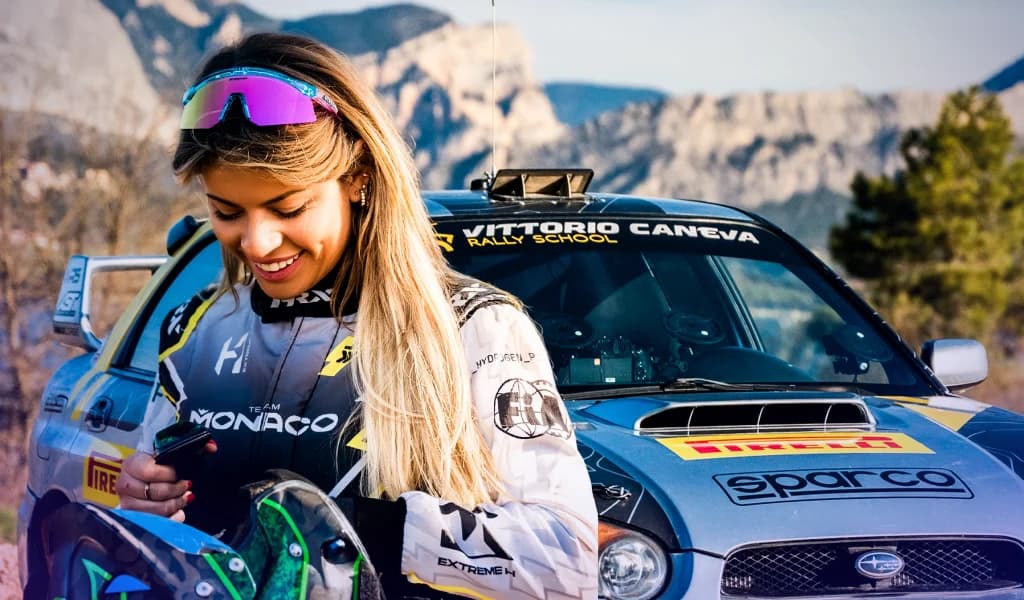
Christine Giampaoli Zonca (Christine “GZ”) experienced a pivotal moment in the Canary Islands that would redefine her path. In an instant, her life shifted direction—like a rally car navigating a hairpin turn, throwing up clouds of dust as it charts a new course.
Early Years – Life on a Sunny Island
Christine was born on July 22, 1993, in Pondicherry, India, to an Italian family who loved to travel. Her family relocated to the Canary Islands when she was young, and that’s where she was raised. The Canary Islands are a part of Spain located about 60 miles off the coast of Morocco. Many are familiar with the people known as Canarios because a healthy portion of them settled in Cuba, ultimately creating the world-leading cigar industry rooted in the soil of that nation.
There are a number of islands in the Canaries, and Christine spent most of her childhood on Gran Canaria. As luck would have it, this island features a very active rally scene. One day, when she was about 17, a yellow car with lots of stickers came whizzing by a road. She was hooked instantly as the wind blew back her hair. She fell in love with the idea of getting inside an exciting vehicle like that.
What Is Rally Racing? How Is It Different from Other Types of Racing?
Rally tracks can be anywhere
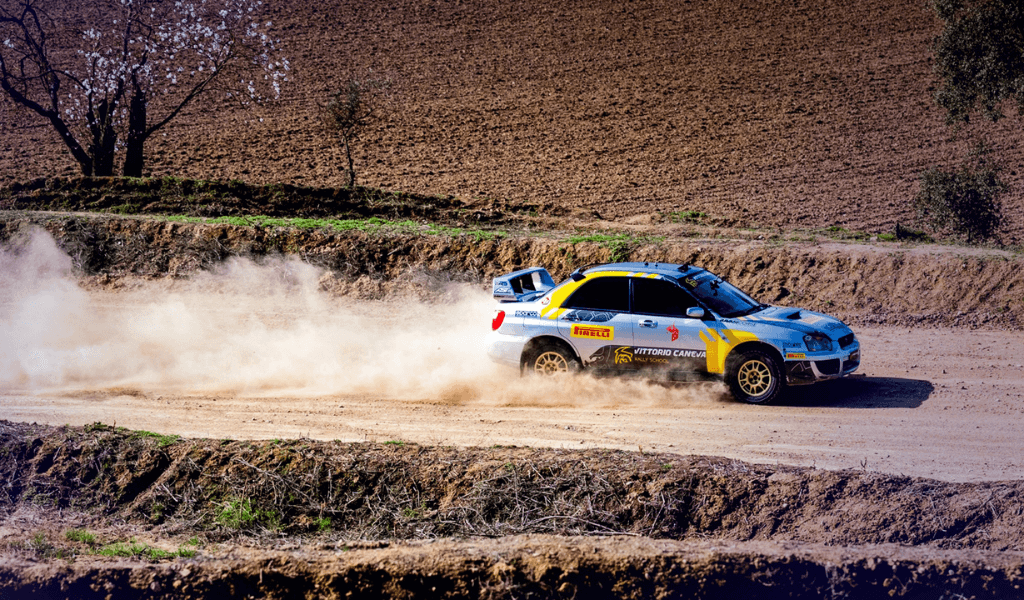
Rally racing is very different from traditional racing, where drivers complete circuits around a developed track. Instead of competing on a normal racetrack, rally drivers zip along public roads that are temporarily closed for competition. You might see cars whipping through forests, mountain roads, or even rural villages. And fans can be anywhere – even dangerously clumped up on a crowded turn.
Rally is not head-to-head
In rally, drivers don’t all start together and jockey for position. Instead, they go one at a time. They then race solo against the clock on timed stages that are recorded individually. The total times are added up for each driver to determine the winners. Instead of competing directly against other drivers, rally racers essentially compete against themselves.
Why are there two people in the car?
Rally has a unique feature: there are two people in the car. In addition to the main driver, there is also a co-driver or “navigator.” The navigator’s job is to do reconnaissance (“recce”) before the race and take notes on all the features of the course. This includes how to handle turns, how fast to go, where there might be jumps, and more. Then, the navigator relays this info in real time as the pair speed down largely unfamiliar roads.
As one might imagine, trust and communication are critical. A small misunderstanding can lead to a crash or a costly mistake, so the pair must have an excellent rapport and ability to communicate. Otherwise, you get the situation in the famous viral video known by the exclamation, “Samir, you are breaking the car!”
What is a rally car? What makes Them different from other racing cars?
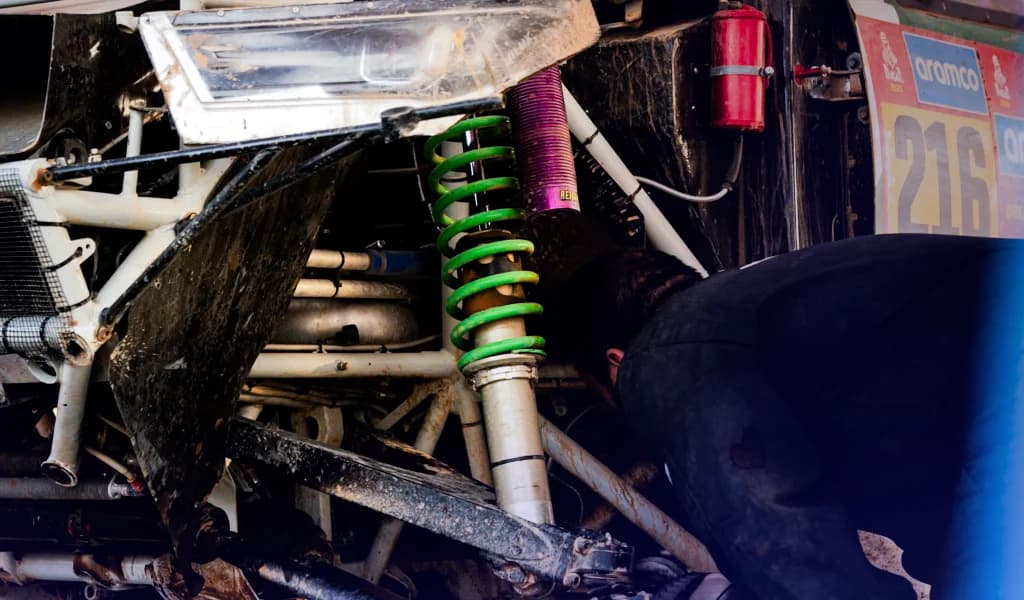
Rally cars are heavily modified versions of normal production vehicles. Historically, this meant Subaru Imprezas, Mitsubishi Lancers, and Audi Quattros. In the modern era, you’ll see cars like the Škoda Fabia RS, the Toyota GR Yaris, the Citroën C3, and the Ford Fiesta. Rally cars feature reinforced suspension systems that can handle tons of jumps and bumps, strong roll cages for driver safety, and other equipment needed to get cars and drivers to the finish line safely.
Between groups of stages, teams return to a service park. Mechanics might get as little as 15 minutes to get the car ready for the next run. Rallies often cover hundreds of miles across multiple days, so it’s essential not to beat the car up more than is necessary. This adds a reliability element to rally racing. After all, anyone can drive well for a few laps and loops. The team that wins is the one that can keep a car on the road and performing well in a grueling marathon-style event.
Rally Racing on Gran Canaria, Where Christine GZ Got Her Start
The rally scene on Gran Canaria is defined by Rally Islas Canarias. It was added to the FIA World Rally Championship (WRC) calendar in 2025 in recognition of the race’s undeniable relevance to the international rally scene. In truth, the Canaries are a hotbed of motorsport passion, with a history of racing dating back to 1977, and so it was only natural that one day the islands would play host to a major global event.
Rally Islas Canarias
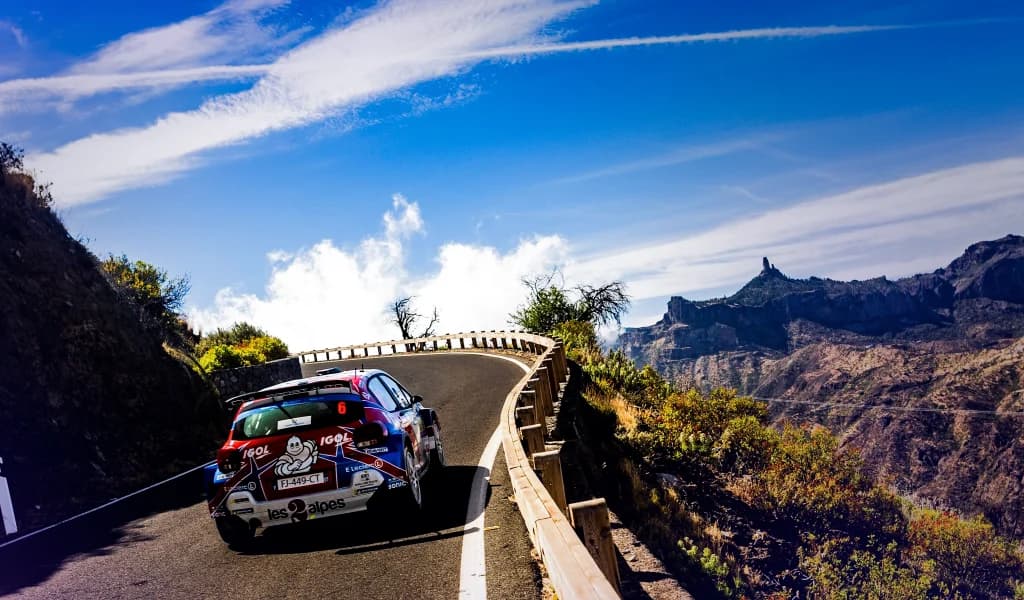
The race is a challenge entirely on tarmac, but the roads are known for being ridiculously abrasive, as they are made in part from volcanic lava. Tires get a good grip, but are punished every revolution of the way. Stages are technical, with lots of switchback hairpins and tight mountain passages as racers climb to around 1,800m of altitude.
The signature stage is the “Super Special Stage” that takes place in Las Palmas. Thousands of fans gather to watch cars race inside a stadium. Experts and former champions like Carlos Sainz describe the local support as “on another level,” noting that fans line nearly every inch of the competitive stages. 2026 will feature the “Golden Edition” of the rally in April as the fifth round of the WRC season.
The First Rally Races of Christine GZ
After the first sparks of interest in rally racing were ignited, Christine developed an interest in cars, engines, and mechanical work. She started getting involved in the local rally environment and began learning about vehicle mechanics and performance modifications. She wasn’t from a “car family” in any way, so this was all new. In fact, her family wasn’t really supportive of the hobby as it blossomed and grew into something that began to resemble a career.
Her first task was to acquire a car. But how does a teenager with little experience get a rally car on the road? Well, if you’re Christine GZ, you build it. It took her about two years to prepare a front-wheel drive 1989 Toyota Corolla AE92 (which she nicknamed “Lolla”) for racing. She learned her skills from a helpful neighbor’s garage. Then, in 2014, at the age of 20, Christine and Lolla hit the road, taking part in every rally in the Canarian Championship. Amazingly, Christine won the Championship of 2WD (category B4) and also earned the Provincial Championship.
She was off to the races.
Canarian Gravel Championship and Degree from U. of Birmingham
In 2015, she returned to the Canarian Gravel Championship while working on a degree in motorsport engineering from the University of Birmingham. Despite some mechanical issues, she managed to finish second in her class, scoring 6 points fewer than the year before.
The degree would ultimately form the foundation of a very hands-on approach to the design and building of the cars she drives. She has spent years learning the mechanical side of motorsport, and it’s a defining characteristic of the way she approaches cars. Rather than focusing only on driving, she is heavily involved in building projects and vehicle preparation. Having a driver who understands how a car is put together can be a major advantage for a team, particularly in motorsport (and later stunt work), where small setup changes can dramatically affect handling and performance.
2016 Rally de Catalunya
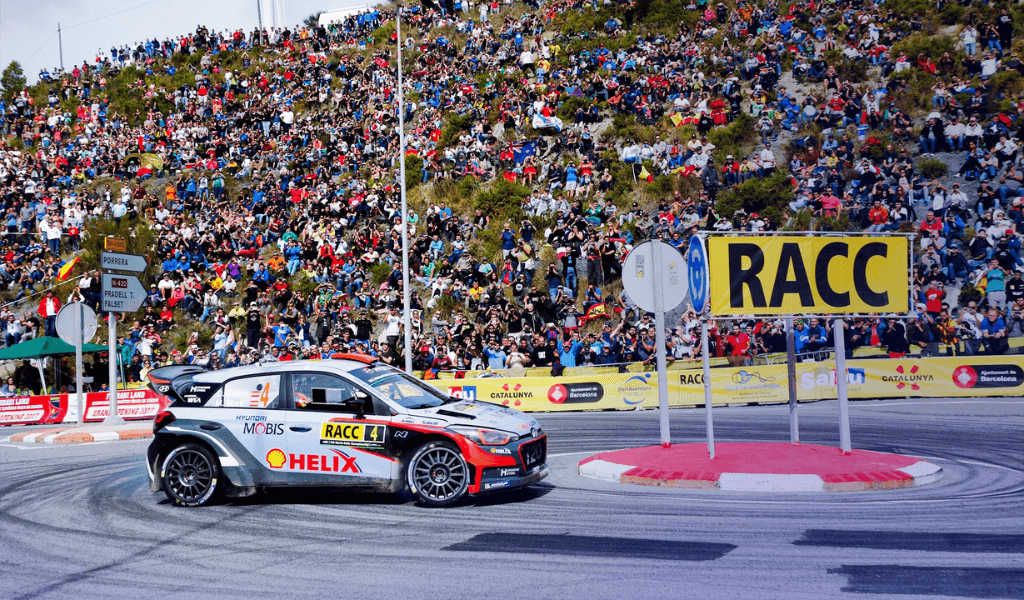
In 2016, Christine entered the Rally de Catalunya, a part of the World Rally Championship. She competed as part of the first all-female rally team that had ever been at the event. This meant that her mechanics, engineers, and coordinators were all women – a big step forward in a male-dominated sport. She drove a Peugeot 208 R2 provided by a Mavisa Sport, a Barcelona-based team. She finished 49th overall, but was the highest-finishing woman. It wasn’t a championship, by any stretch, but it helped her get her foot in the door at the international level.
Spanish Rally Gravel Championships
She took part in the Spanish Rally Gravel Championship that year as well, again finishing as the top female driver in the championship standings. The same was true for the Rally Ciutat de Cervera, where she finished in 2016 and 2017 as the top female entrant.
The Baja 1000
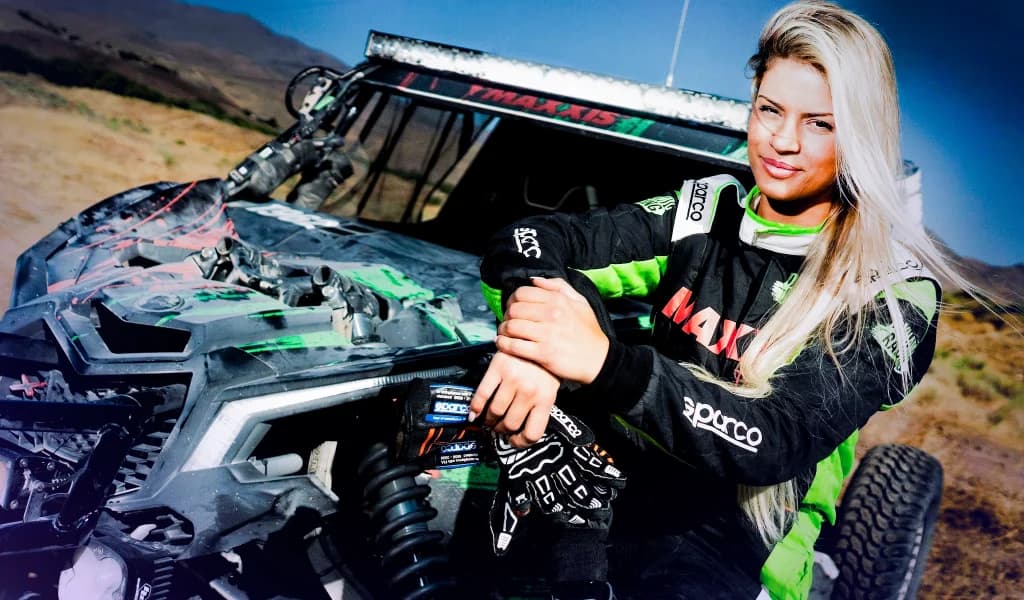
Christine GZ has also tested her driving skills in the blazing heat of Mexico’s legendary Baja 1000 desert endurance race. She competed in the event in 2018 as part of a North American off-road racing program with Dynamic Racing. She drove a Can-Am Maverick X3 UTV in the competitive Pro class.
This race is a grinder. There are no real breaks. Instead, the Baja 1000 is a nonstop endurance race across hundreds of miles of desert terrain. There are rocky trails, deep sand washes, and high-speed open sections. The race takes about twenty hours total, meaning that drivers must continue into the night. Christine and her team finished an impressive 7th in the UTV Pro class.
Coming back from disaster
Unfortunately, coming out of the pandemic, Christine suffered a major setback. She was taking part in the Desert X-Prix in Saudi Arabia in 2022 and was gearing up for a qualifying run. She decided to go “flat out the whole way” and “see what happens.” Amazingly, she was leading everyone for a brief moment in the sun in her gorgeous Veloces Odyssey 21 (a car that looked something like a lifted Batmobile). The pedal to the medal approach was paying off.
Until it wasn’t.
Christine lost control of her car in a rut in the sand and rolled “like in a washing machine.” She broke her foot and more, and her team subsequently dropped her from the roster. She couldn’t drive and was facing a long nine-month rehab. Candidly, she reports that she didn’t even know if she could make it back to rally driving after that. She says her mindset at times was “super negative.”
But was she ultimately scared to get back behind the wheel? For Christine, the answer was no. She feels that what she gets from racing cars is “so much higher, higher than anything else” that she’s not scared of the risks.
When you’re Christine GZ, the rush is well worth it.
The move to the U.S. and Christine’s stunt driver era
After her recovery, Christine moved to the United States and expanded her career. She began working as a stunt and precision driver in Los Angeles, performing controlled driving sequences for film, television, and automotive productions. Her rally background made her a perfect fit.
Women in Motorsport – Christine’s Role as Role Model
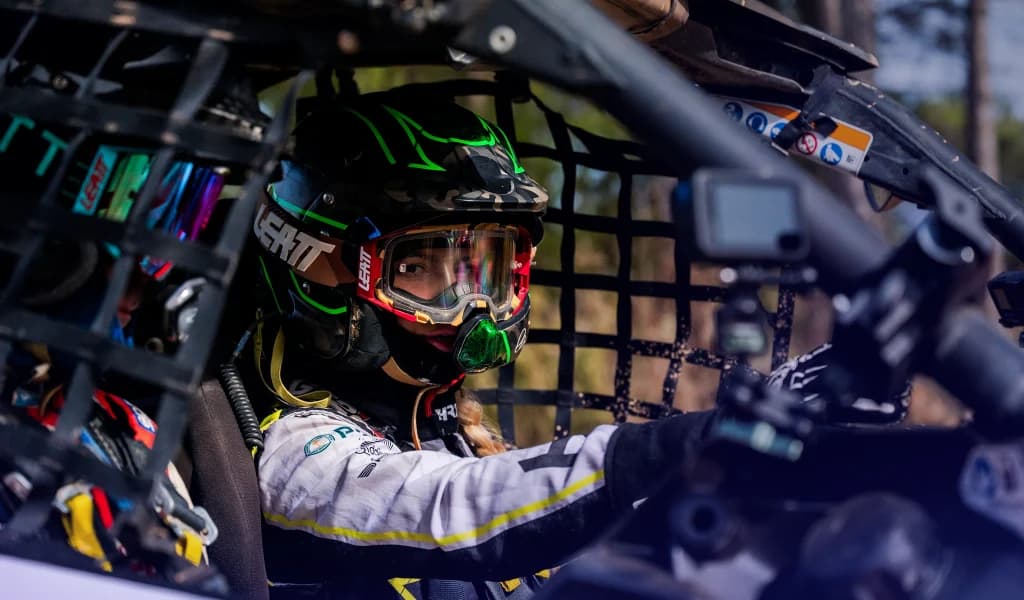
It nearly goes without saying that all kinds of racing have historically been dominated by male participants. This is especially true of disciplines like rally driving.
While women have competed in motorsports, relatively few have built high-profile careers. Christine’s work in rally racing, stunt driving, and her understanding of the technical side of things have helped her create media that expands visibility of women in the world of high-performance automobiles. Christine has her place in a tradition carved out by a few brave trailblazers whose passion for cars and speed overcame the gender-based obstacles in their way. These include women like Danica Patrick, who won the Indy Japan in 2008, or Michèle Mouton, whose 1982 second-place finish in the WRC drivers’ championship is still the highest finish ever for a woman.
Few have the credibility with cars that Christine GZ does. She can build, she can drive, she can pull impressive tricks. She provides a visible example of someone who has navigated multiple paths within the automotive world, and it can serve to encourage young women with similar interests. Christine shows that young women can indeed follow their passions wherever they lead, no matter how dirty, winding, and dangerous the track ahead may be.
In fact, that just might be part of the fun.
Christine GZ on The Team Ignition Show
In this episode of the Team Ignition Show, Selema Masekela heads to Catalonia to meet Christine. After revealing the story behind the most brutal moment she’s faced at speed, Christine straps Selema in for a white-knuckle off-road hot lap – flat out at 120mph along a narrow dirt track. But first, she hands him the keys and teaches him what it actually takes to drive a rally car.