Speed flying is a sport that looked at paragliding and thought it needed more high-speed acrobatics.
You’ve probably seen some videos on your algorithm of speed flyers in action. These daredevils whip down mountain sides with what looks like a parachute, doing spins, barrel rolls, and skimming the surface on their descent. It’s the thrill of a wingsuit with the gear of a paraglider.
This sport’s origins might surprise you, not to mention the way it’s taken off with alpine skiing.
From Skydiving to Paragliders: Where It All Started
It should come as no surprise that speed flying’s roots are in paragliding and skydiving. In the 1960s, skydiver
The roots of speed flying are in paragliding itself, which came from parachuting. It was in the 1960s that Pierre-Marcel Lemoigne, a French skydiver and aeronautical engineer, found that he could get much better control over his rig if he cut slots in the chute.
These adaptations improved lift and gave the aviator greater control over their flight path. Lemoigne refined his designs and the resulting chutes came to be used by the new sports of paragliding and parasailing.
Further developments pushed these sports and their gear to the next level. Walter Newmark started towing these chuts and their aviators into the air, developing what he called “parascending.”
At the same time, NASA engineer David Barish continued to refine Lemoigne’s advances. Barish developed the Sailwing, a more rectangular parachute designed to help space capsules safely descend to Earth. The Sailwing’s more rectangular shape offered more maneuverability than ever before, and it wasn’t long before paragliders started copying the designs.
The French Connection
Everything came together in Mieussy, France in 1978 when Jean-Claude Bétemps and André Bohn ran off Mont Pertuiset and then glided down to the ground.
Most would put the birth of modern paragliding right there in that moment. The sport took off after that, and thrill-seekers began to wonder if this relatively peaceful activity might be turned into something a bit more dynamic and exciting.

Around 2001 in Valfréjus in the French Alps, an answer took shape. Three daring skydivers and paragliders (Frédéric Fugen, Frank Coupat, and Vince Reffet) were unable to go paragliding due to strong winds.
Fugen got an idea: why not ski a steep face and then use their canopies to launch upward? This improvised workaround ultimately led to folks seeking a quicker way to shoot down a mountain, and speed riding took off. By 2005, manufacturers started making true “speed wings” that were made for speed flying.
How Speed Flying Works
The big technical difference between speed flying and paragliding starts with wing size. A standard paraglider wing is usually cut to about 20 square meters of surface area (or more). It’s made for maximum lift, leading to long, soaring flights.
Speed wings are smaller, running from 7 to 18 square meters. The smaller wing offers higher wing loading, which brings faster and more responsive flight. You might think of the vibe as closer to kite surfing than sleepy paragliding.
That size difference changes everything. Pilots aren’t trying to catch thermals and climb. Speed wings are made for the dive. Athletes jump from a steep slope or cliff, and the wing accelerates them downhill right along the terrain. They’re very close to the ground (a few feet off, at times), weaving around rocks, skimming the ridgelines, and threading valley terrain that a paraglider would fly well above.
Gear is minimal. Pilots use a speed wing, a lightweight harness that folds into a backpack, and then wear a helmet, gloves, and sturdy footwear. That’s it.
Speed Flying vs. Speed Riding
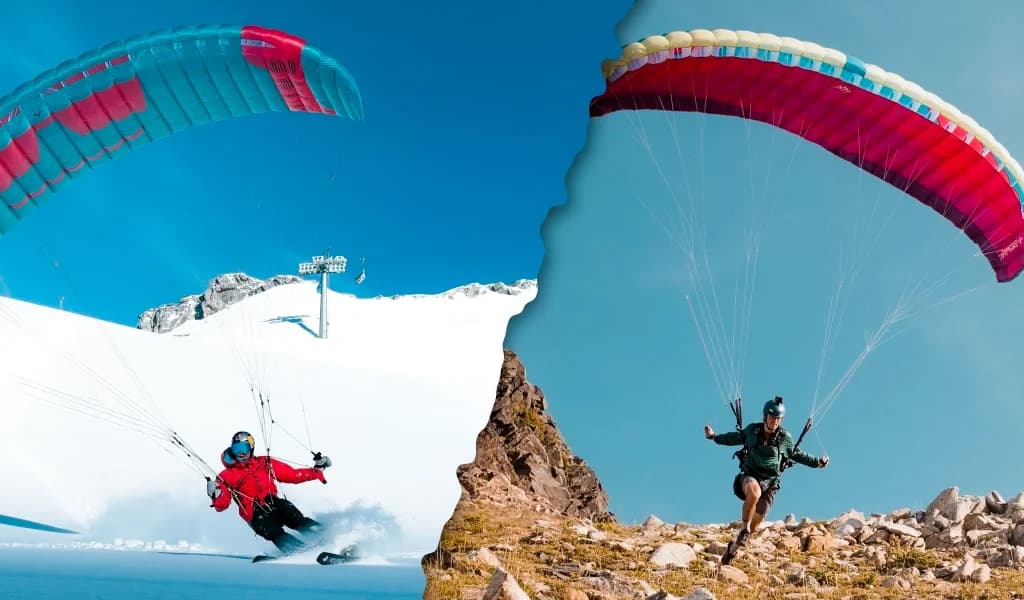
The two phrases are sometimes used interchangeably, but the distinction is simple: speed riding is done on skis, while speed flying is foot-launched. Speed flyers go over grass or rock in the warmer months.
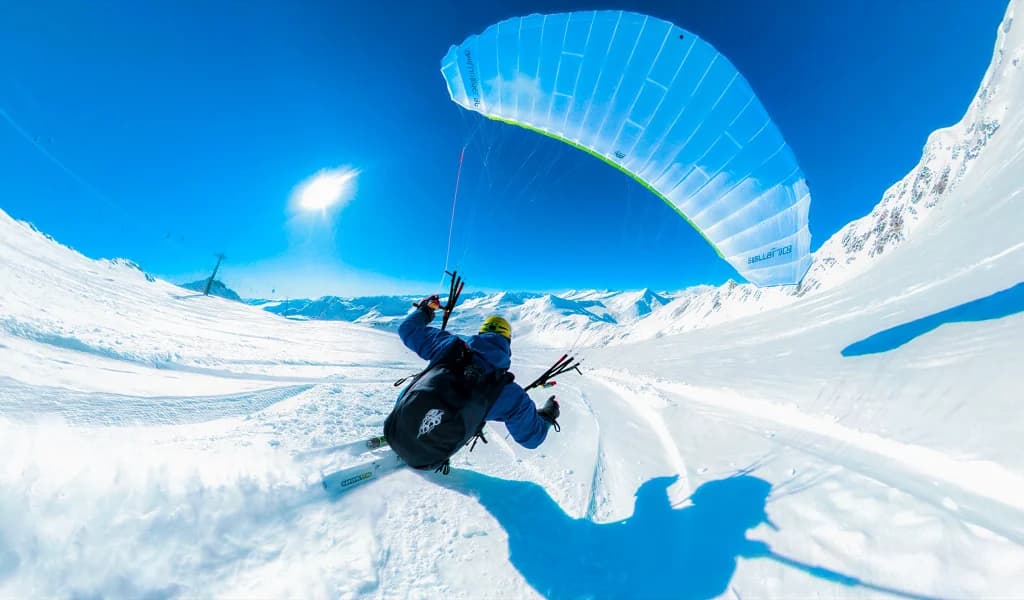
Speed riders are in the snow, alternating between carving turns on the mountain mixed with short bursts of flight. They use the wing to control speed, generate lift over terrain features, and then land back on the slope to keep skiing. Thanks to the power of flight, speed riders have access to lines that most people could never access otherwise, for one reason or another.
Two Kinds of Wing
Within both disciplines, pilots prefer different specialized wing types.
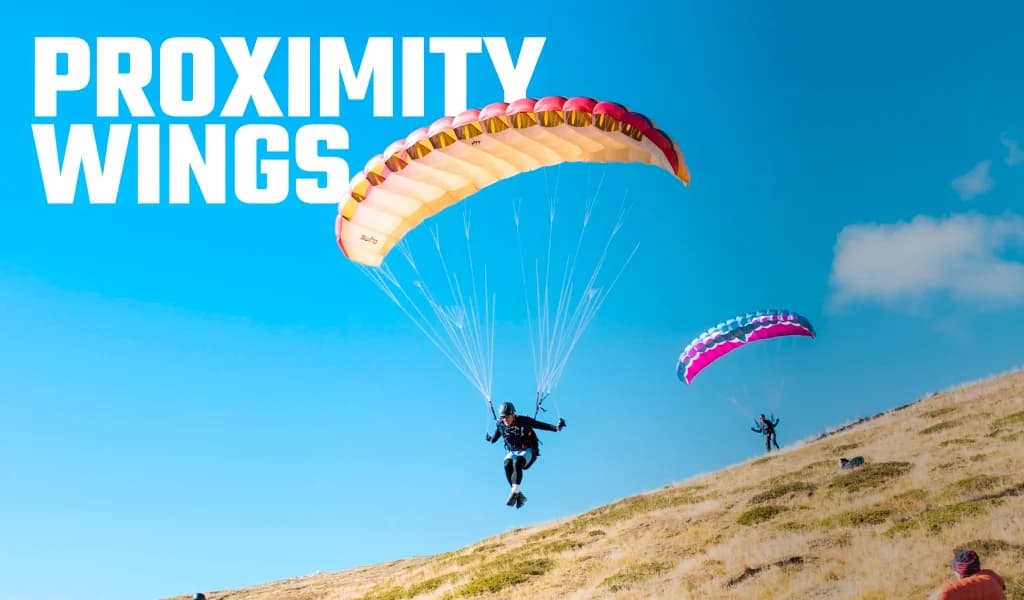
“Proximity wings” have lower cell counts and less lift. These are built for pilots who want to fly as close to the terrain as possible. After a hard turn, these wings are made to keep diving rather than climbing, favoring speed and control over hang time.
“Mini wings,” on the other hand, borrow more from paragliding design. They have more cells and higher aspect ratios that let pilots catch ridge lift and extend their flight time. This lets them trade some speed for the ability to soar and maneuver.
The Mental Aspect
Experienced pilots will tell you that, while the mountain demands respect, the most dangerous part of the sport is what happens inside the head of the pilot. Unfortunately, most accidents are due to pilot error. These mistakes include bad takeoffs, misjudged proximity lines, or downsizing to a smaller, faster wing before they are really ready for it. As one longtime instructor put it, ego is a bigger risk factor than an actual wing collapse.
As with so many adventure sports, mental discipline is key. When you’re pushing the envelope, risk is a given. The task is to figure out how to balance risk and safety. Veteran pilots will hold themselves back a bit, staying in their comfort zone on wing size and refusing to skip progression steps until they have built confidence over years of runs. Each flight has to become a fresh judgment call.
Weather windows also matter a lot. Pilots typically fly only in calm, predictable conditions. This means that flights take place in early morning or evening. A small, highly loaded wing gives almost no margin to deal with turbulence or sudden gusts. Asymmetric collapse can happen in a millisecond, and so situational awareness and training the correct rapid reactions are lifesaving skills.
Where the Sport Stands Today
Speed flying and speed riding are still very niche compared to mainstream paragliding. The community continues to grow, however. There is no world championship, and so instead the scene is built around regional meets and sanctioned events.
Organizations like the United States Hang Gliding and Paragliding Association authorize speed-flying-specific competitions, while European gatherings like the Speed Riding World Meet in Val d’Isère draw pilots from across the continent. They join in multi-day sessions built as much around community and shared progression as pure competition.
Most who encounter the sport will see the obvious danger. Pilots take lines that have them close enough to touch rock at high speeds. Skiers will end a run in mid-air. But for pilots like Valentin Delluc, one of the sport’s best-known riders, the appeal has always been less about the shock value and more about pure presence in the moment.
There’s no room to think about anything except the next hundred meters of terrain when you’re speed flying.
For many pilots, that rush that crowds out any other thought is part of why they do what they do. It’s a sport built on the same evolutionary lineage as most of adventure sports culture. You take something that already exists, strip away some of the aspects of safety and comfort, and revel in the exciting parts that remain.
That’s how you truly leave the ground behind.